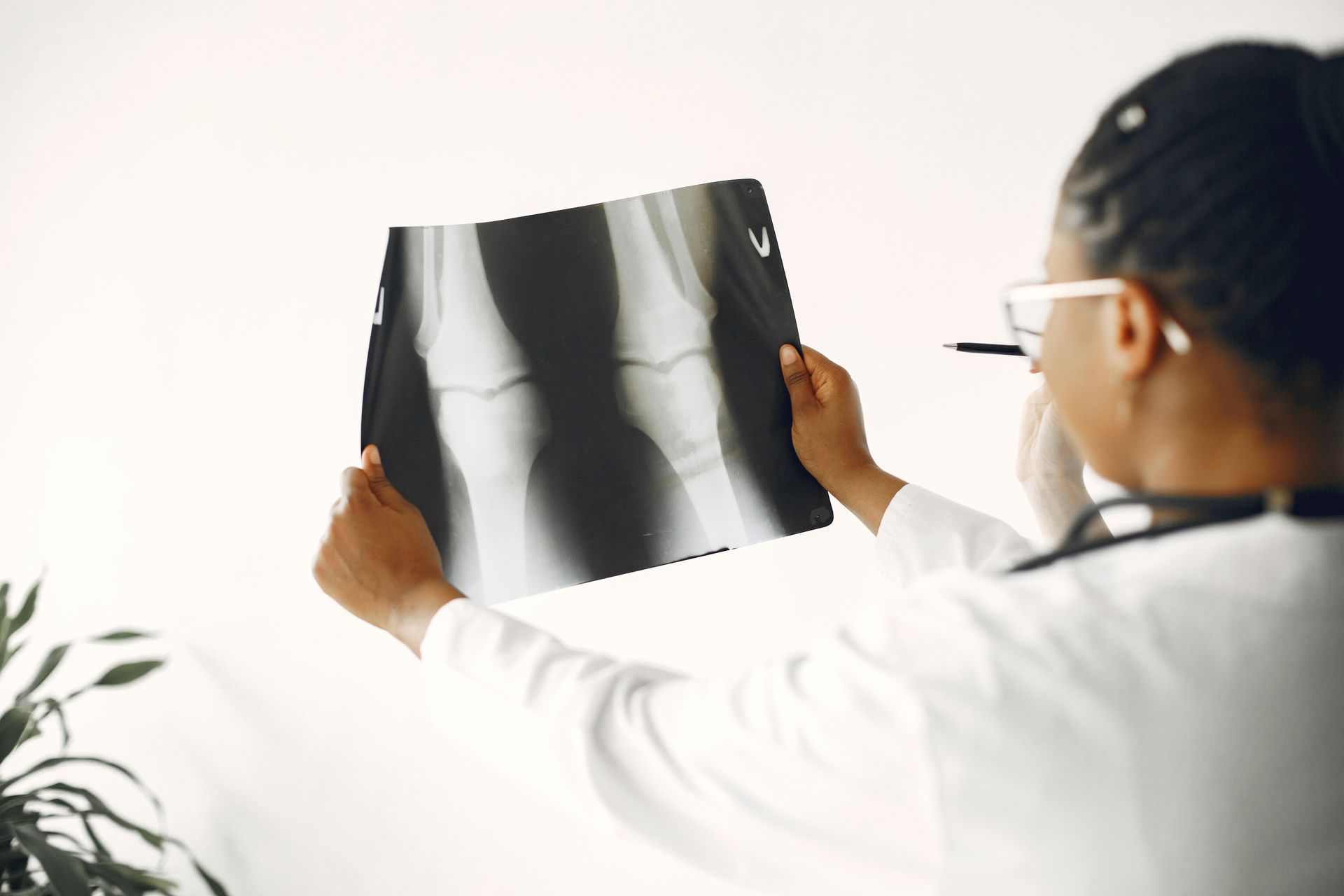

A knee that feels stuck can be worrying, particularly when you suddenly cannot straighten or bend it normally. Knee locking can happen for different reasons. In some people, it is a temporary catching sensation associated with pain or swelling. In others, something inside the joint may physically interfere with movement. Meniscus injuries are one possible cause, but arthritis, loose cartilage or bone fragments and other knee problems can also produce locking or catching symptoms.
What does knee locking mean?
Knee locking describes a sensation that the knee becomes stuck or cannot move through its normal range. Some people experience a brief catching sensation and can move the knee again after changing position. Others may find that the knee is genuinely blocked and cannot be fully straightened or bent.
This distinction is important. Occasional clicking or catching does not always mean that there is a major structural problem. True locking, particularly when the knee remains stuck in one position, can indicate a mechanical problem inside the joint and should be assessed.
What can cause a knee to lock?
Several conditions can cause the knee to catch, lock or feel as though something is blocking its movement. The cause cannot be determined from the locking sensation alone, so the symptoms, examination and sometimes imaging need to be considered together.
- Meniscus tear, particularly when a torn portion interferes with normal joint movement
- Loose cartilage or bone fragments within the knee joint
- Osteoarthritis with changes inside the joint that restrict smooth movement
- Knee injury involving the meniscus or other structures
- Swelling and inflammation that temporarily restrict movement
- Other structural problems inside the knee joint
Can a meniscus tear cause knee locking?
Yes. The menisci are crescent-shaped pieces of cartilage that help distribute load and provide stability within the knee. A meniscus can be damaged during a twisting injury, sports activity or, in some people, through gradual degenerative changes.
A meniscus problem may cause pain along the joint line, swelling, clicking, catching or difficulty fully bending or straightening the knee. In some cases, a displaced portion of the meniscus can mechanically block movement and produce true locking.
Not every meniscus tear causes locking, and not every locked or catching knee is caused by a meniscus tear. A clinical assessment is therefore important before deciding on treatment.
What is the difference between knee catching and true locking?
Knee catching usually means that the joint briefly feels as though it catches during movement but then moves normally again. This can occur with several knee conditions and does not necessarily mean that the knee is physically blocked.
True locking is different. The knee may become stuck in a particular position and you may be unable to fully straighten or bend it. If this happens following an injury, particularly a twisting injury, prompt orthopaedic assessment is appropriate.
- Catching: the knee briefly catches but movement returns
- Locking: the knee becomes stuck and normal movement is physically restricted
- Pain-related stiffness: movement is possible but limited because of pain
- Swelling-related restriction: swelling makes bending or straightening difficult without a true mechanical block
Can arthritis cause a locked knee?
Knee osteoarthritis can cause pain, stiffness, swelling, reduced movement and a sensation that the knee is difficult to straighten. Changes within an arthritic joint can also contribute to catching or mechanical symptoms.
However, a knee that suddenly becomes completely stuck should not automatically be attributed to arthritis. A new episode of true locking may require assessment for a meniscus problem, loose body or another mechanical cause.
When should you see an orthopaedic doctor for knee locking?
A medical assessment is particularly important when the knee remains stuck, the movement is significantly restricted or the locking began after an injury.
You should also seek assessment if locking is repeatedly occurring, is associated with swelling or pain, or is interfering with walking, stairs, exercise or everyday activities.
- You cannot fully straighten or bend the knee
- The knee becomes completely stuck in one position
- Locking started after a twisting injury, fall or sports injury
- The knee repeatedly catches or locks
- There is significant swelling after an injury
- You have persistent knee pain along with locking
- The knee gives way or feels unstable
- Symptoms are interfering with normal walking or daily activities
How is a locked knee diagnosed?
The assessment usually begins with a discussion about when the locking occurs, whether there was an injury and whether the knee can fully bend and straighten between episodes.
The doctor examines the knee for tenderness, swelling, range of movement and signs that may point towards a meniscus, ligament or other joint problem.
X-rays may be useful for assessing bone changes and osteoarthritis. An MRI may be considered when there is concern about soft-tissue structures such as the meniscus or when the diagnosis requires further clarification.
- Discuss how and when the locking occurs
- Identify any previous injury or twisting movement
- Assess swelling, tenderness and knee movement
- Examine knee stability and other clinical findings
- Review X-rays when appropriate
- Consider MRI when soft-tissue or internal joint damage needs further assessment
- Determine whether conservative treatment or another intervention is appropriate
How is knee locking treated?
Treatment depends on the underlying cause rather than the locking symptom alone. A mild problem that is improving may be managed without surgery, while persistent mechanical locking caused by a structural problem may require a different approach.
Depending on the diagnosis, treatment may include activity modification, physiotherapy, medication for symptom control or other non-surgical measures. Some meniscus problems can be managed conservatively, particularly when there is no persistent mechanical block.
If there is true mechanical locking or a structural problem that is not responding to appropriate treatment, an orthopaedic surgeon may discuss whether a procedure such as knee arthroscopy is appropriate.
Does a locked knee always need surgery?
No. Knee locking does not automatically mean that surgery is required.
The decision depends on the cause, severity of symptoms, whether the knee is truly mechanically blocked, the findings on examination and imaging, and how the problem responds to non-surgical treatment.
Some knee conditions improve with rehabilitation and activity modification. Persistent true locking caused by a structural problem inside the joint may require a surgical discussion.
What should you do if your knee suddenly locks?
If your knee suddenly becomes stuck, avoid repeatedly forcing it through the blocked movement. If the locking occurred after an injury or you cannot restore normal movement, arrange an orthopaedic assessment promptly.
If there is significant swelling, severe pain, inability to bear weight or another concerning symptom after an injury, medical assessment should not be delayed.
The bottom line
Knee locking can have several causes, ranging from meniscus problems and arthritis to loose material inside the joint. Occasional catching is not necessarily a sign of serious damage, but a knee that becomes genuinely stuck or cannot be fully straightened deserves attention.
If your knee repeatedly locks, particularly after an injury or together with pain and swelling, an orthopaedic evaluation can help identify the cause and determine whether physiotherapy, other conservative treatment or a procedure is appropriate.
Frequently asked questions
Repeated knee locking can have several causes, including a meniscus tear, loose material inside the joint or arthritis-related changes. A specialist assessment can help determine whether the locking represents a true mechanical block or another type of knee stiffness or catching.
No. A meniscus tear is one possible cause, but arthritis, loose cartilage or bone fragments and other structural problems can also cause locking or restricted knee movement.
Yes. Certain meniscus tears can cause catching or true locking, particularly when a displaced portion of the meniscus interferes with normal movement of the knee.
Not always. Treatment depends on the cause and severity of the problem. Some conditions can improve with conservative treatment, while persistent true mechanical locking may require consideration of a surgical procedure.
You should arrange an orthopaedic assessment if the knee remains stuck, you cannot fully straighten or bend it, locking repeatedly occurs, or the problem started after an injury. Significant swelling, severe pain or difficulty bearing weight after an injury also warrants prompt medical assessment.
Originally published on dranilraheja.com.