Expert hip replacement with the Direct Anterior Approach (DAA), a muscle-sparing technique that helps suitable patients recover with less early pain and faster walking.
Hip replacement surgery is considered when hip pain, stiffness or limping has started controlling daily life and medicines, physiotherapy, activity changes or injections no longer give reliable relief. It is commonly performed for advanced osteoarthritis, avascular necrosis, rheumatoid arthritis, hip fractures and failed previous hip implants.
Dr. Anil Raheja is an experienced hip replacement surgeon in Delhi with 30+ years in orthopaedics and joint replacement. His work includes primary hip replacement, complex hip replacement and revision hip replacement, with a special focus on the Direct Anterior Approach, a muscle-sparing technique for suitable patients.
What is hip replacement surgery?
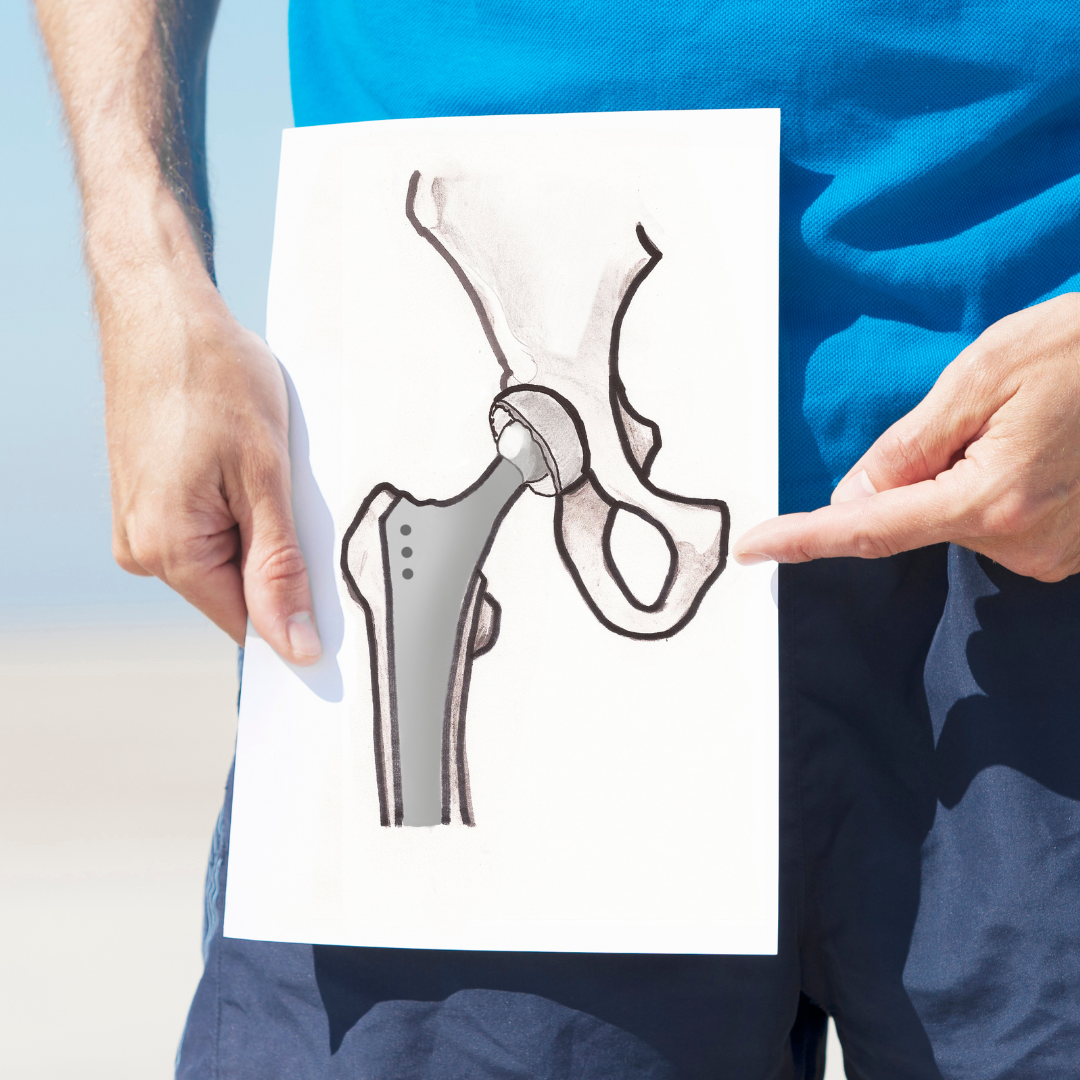
The hip is a ball-and-socket joint. In hip replacement, the damaged bone and cartilage are removed and replaced with artificial components. The socket side is reconstructed with a cup and liner, while the ball side is replaced with a stem and ball fixed into the thigh bone.
The goal is not only to remove pain. A well-planned total hip replacement also aims to restore leg length, stability, range of movement and confidence while walking.
How hip replacement restores the damaged joint
When should you consider hip replacement?
Hip replacement is usually not the first treatment for hip pain. It is considered when the joint damage is advanced enough that daily function is suffering despite reasonable non-surgical care.
A consultation helps confirm whether the pain is truly coming from the hip joint, because back problems, nerve pain and knee issues can sometimes mimic hip pain.
Hip or groin pain while walking
Pain that disturbs sleep or rest
Difficulty climbing stairs or getting into a car
Limping or reduced walking distance
Stiffness while wearing shoes, sitting cross-legged or bending
X-ray or MRI evidence of advanced arthritis, AVN, fracture damage or implant failure
Loss of independence despite medicines, physiotherapy or injections
Conditions treated with hip replacement
Hip replacement is used for several conditions where the natural joint surface is damaged beyond repair. The exact operation depends on age, bone quality, diagnosis, deformity, previous surgery and activity goals.
Advanced osteoarthritis of the hip
Avascular necrosis, also called AVN of the femoral head
Rheumatoid arthritis affecting the hip
Hip fracture in selected patients
Post-traumatic arthritis after an old injury
Developmental or structural hip problems causing early joint damage
Loose, worn, infected or failed previous hip replacement requiring revision surgery
Direct Anterior Approach for hip replacement
The Direct Anterior Approach reaches the hip from the front through a natural interval between muscles. In suitable patients, this can reduce muscle disruption compared with approaches that split or detach muscles to reach the joint.
Because the muscles around the hip are preserved, many patients experience smoother early walking, less early pain and a faster start to rehabilitation. Long-term success still depends on accurate implant positioning, bone quality, patient fitness and proper recovery.
Benefits of the Direct Anterior Approach
The Direct Anterior Approach is not a marketing shortcut and it is not automatically for everyone. Its value depends on careful patient selection and surgeon experience. When appropriate, it can be a strong option for patients who want a muscle-sparing hip replacement.
Muscle-sparing access to the hip joint
Smaller single incision in many cases
Less early postoperative pain for suitable patients
Earlier walking and functional confidence
Lower dislocation risk in selected patients
More natural early hip movement
Useful option for many primary hip replacement cases
Is Direct Anterior Hip Replacement right for you?
Not every patient is an ideal candidate for DAA. Body habitus, bone shape, deformity, previous surgery, fracture pattern, implant requirements and medical fitness all matter.
Dr. Raheja reviews the examination, X-rays and any MRI or CT findings before recommending the safest approach. The right operation is the one that gives stable implant placement, good function and the lowest practical risk for that individual patient.
Hip replacement recovery period
Recovery happens in stages. Many patients start assisted walking soon after surgery, usually with a walker or crutches at first. Hospital stay and discharge timing depend on medical fitness, wound condition, pain control and ability to move safely.
Most people see major improvement over the first few weeks, but strength, balance and confidence continue to build for months. Many reliable medical resources describe hip replacement recovery as a several-month process, with improvements continuing through the first year.
First days: pain control, assisted walking, breathing and circulation exercises
First 2 weeks: wound care, swelling control and safe movement at home
Weeks 2 to 6: gradual increase in walking, daily activity and independence
Around 6 weeks: many patients discuss driving and work return depending on recovery
3 months: many patients are functioning much better, though strength can keep improving
Up to 1 year: continued gains in endurance, confidence and comfort
Cost of hip replacement surgery in Delhi
Hip replacement surgery cost in Delhi varies widely because every case is different. A straightforward primary total hip replacement is different from a complex deformity case, fracture case or revision hip replacement.
The final estimate depends on hospital category, room type, implant choice, bearing surface, surgical complexity, medical condition, investigations, anaesthesia, medicines, insurance approval and rehabilitation. Instead of relying only on online averages, patients should ask for a case-specific estimate after examination and imaging review.
How Dr. Raheja plans a hip replacement
A good hip replacement starts before the operation. Dr. Raheja studies the diagnosis, hip anatomy, bone quality, leg length, deformity, activity needs and medical risks before choosing the implant and surgical approach.
The plan is personalised for pain relief, stability and durable movement. In revision cases, planning also includes identifying why the old implant failed, whether bone loss is present and what reconstruction may be needed.
Clinical examination to confirm the pain source
X-ray assessment of arthritis, AVN, fracture or implant failure
MRI or CT when more detail is needed
Implant selection based on anatomy and bone quality
Approach selection, including DAA where suitable
Recovery plan for walking, stairs, driving, work and home safety
Preparing for surgery and home recovery
Planning the first few weeks makes recovery smoother. Patients should prepare a safe walking path at home, keep frequently used items at waist level, arrange help for transport and meals, and discuss medicines, diabetes, blood thinners, dental infection or skin infection before surgery.
After surgery, follow the wound care, walking, blood clot prevention and physiotherapy instructions given by the team. Avoid rushing high-risk movements or heavy activity until cleared.
Book a clear hip assessment
If hip pain is reducing your walking, sleep or independence, the right next step is a diagnosis-led consultation. You should leave knowing whether your pain is from arthritis, AVN, fracture damage, back-related pain or another cause, and whether hip replacement is truly the right option.
Dr. Anil Raheja can help you compare non-surgical care, Direct Anterior Hip Replacement, standard total hip replacement, complex replacement or revision surgery based on your actual scans and symptoms.
Frequently asked questions
The appropriate hip replacement surgeon for you is someone with strong joint replacement experience, clear diagnosis-led decision-making, expertise in primary and complex cases, and a structured recovery plan. Dr. Anil Raheja has 30+ years of orthopaedic experience and performs primary, complex and revision hip replacement, including Direct Anterior Hip Replacement for suitable patients.
Direct Anterior Hip Replacement is a muscle-sparing approach where the hip is reached from the front through a natural interval between muscles. In suitable patients, it may support less early pain, faster walking and a lower risk of dislocation.
It can offer early recovery advantages for selected patients, but it is not automatically for every case. The safest approach depends on anatomy, bone quality, deformity, previous surgery, surgeon experience and implant requirements.
Hip replacement may be needed when hip arthritis, AVN, fracture damage or implant failure causes persistent pain, stiffness, limping, sleep disturbance or loss of independence despite medicines, physiotherapy and other non-surgical care.
Many patients begin assisted walking soon after surgery and improve significantly over the first 6 to 12 weeks. Recovery varies by age, fitness, approach, implant, medical condition and rehabilitation, with strength and confidence often continuing to improve for several months.
The cost varies depending on hospital, room category, implant type, surgical approach, primary versus revision surgery, investigations, medicines, insurance and rehabilitation. A reliable estimate is given after examination and imaging review.
Yes. Avascular necrosis, or AVN, can damage the femoral head and lead to collapse of the hip joint. If pain and joint damage are advanced, total hip replacement may be recommended.
Many total hip replacement operations are completed in about 1 to 2 hours, though complex or revision cases can take longer. Total hospital time also includes anaesthesia, recovery monitoring and mobilisation.
Many patients start walking with support soon after surgery, depending on medical fitness, pain control, implant stability and surgeon instructions. A walker or crutches are commonly used in the early phase.
Risks can include infection, blood clots, dislocation, leg length difference, fracture, implant loosening, nerve irritation, persistent pain or need for revision surgery. Careful planning, experienced surgery and proper rehabilitation help reduce risk.
Plan this visit
Plan your hip replacement consultation
Three choices help make the consultation sharper and the recovery plan more practical.
What is limiting you most?
Choose the closest pattern.
Ask the surgeon
Questions about hip replacement?
Costs, recovery time, whether surgery is even needed in your case. Send your question and get a call back within one working day.