Knee replacement surgery is considered when knee arthritis, deformity or injury causes pain and stiffness severe enough to limit walking, stairs, sleep, work or independence, and non-surgical treatments are no longer giving reliable relief.
Dr. Anil Raheja plans knee replacement around the actual pattern of damage. Some patients need total knee replacement, where all major joint surfaces are resurfaced. Others may be candidates for partial knee replacement, where only the damaged compartment is replaced and healthy parts of the knee are preserved.
What is knee replacement surgery?
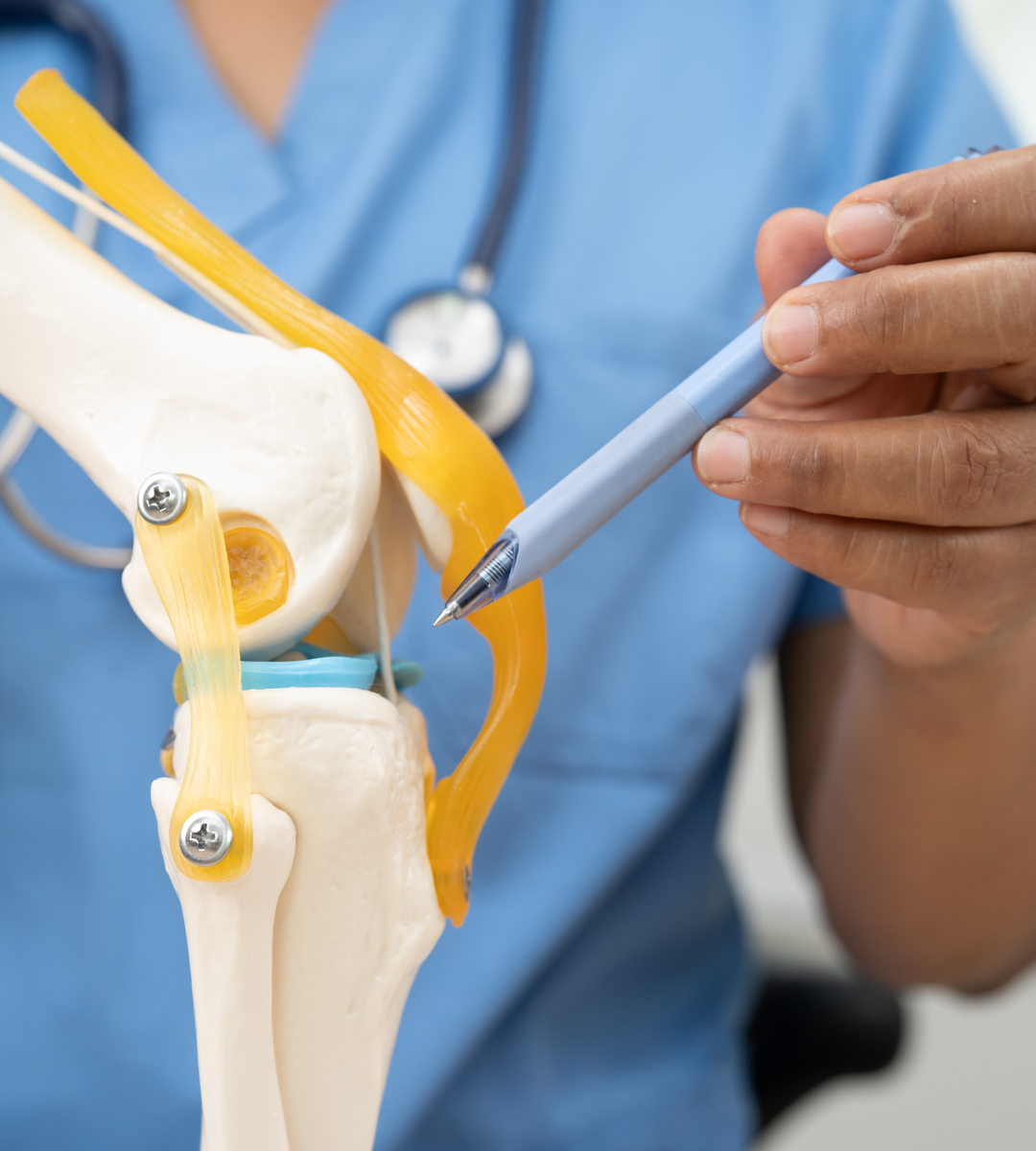
Knee replacement surgery is more accurately understood as knee resurfacing. The damaged cartilage and a small amount of underlying bone are removed from the worn joint surfaces, and metal and medical-grade plastic components are placed to create a smoother moving knee.
The aim is to reduce pain, improve alignment, restore useful knee movement and help the patient return to daily activities with more confidence.
How knee replacement resurfaces the damaged joint
When is knee replacement needed?
Knee replacement is usually recommended only after a careful assessment of pain, deformity, X-rays, mobility, walking distance and previous treatment. The decision should be based on how much the knee is affecting life, not simply on age or an X-ray report.
Many patients try medicines, physiotherapy, weight management, walking support, activity changes or injections first. Surgery becomes more relevant when these options no longer control symptoms well enough.
Severe knee pain while walking or climbing stairs
Pain at rest or pain that disturbs sleep
Knee stiffness that makes sitting, standing or getting into a car difficult
Bowing or deformity of the leg
Repeated swelling and inflammation that does not settle
Reduced walking distance despite medicines or physiotherapy
Loss of independence in daily activities
Total knee replacement vs partial knee replacement
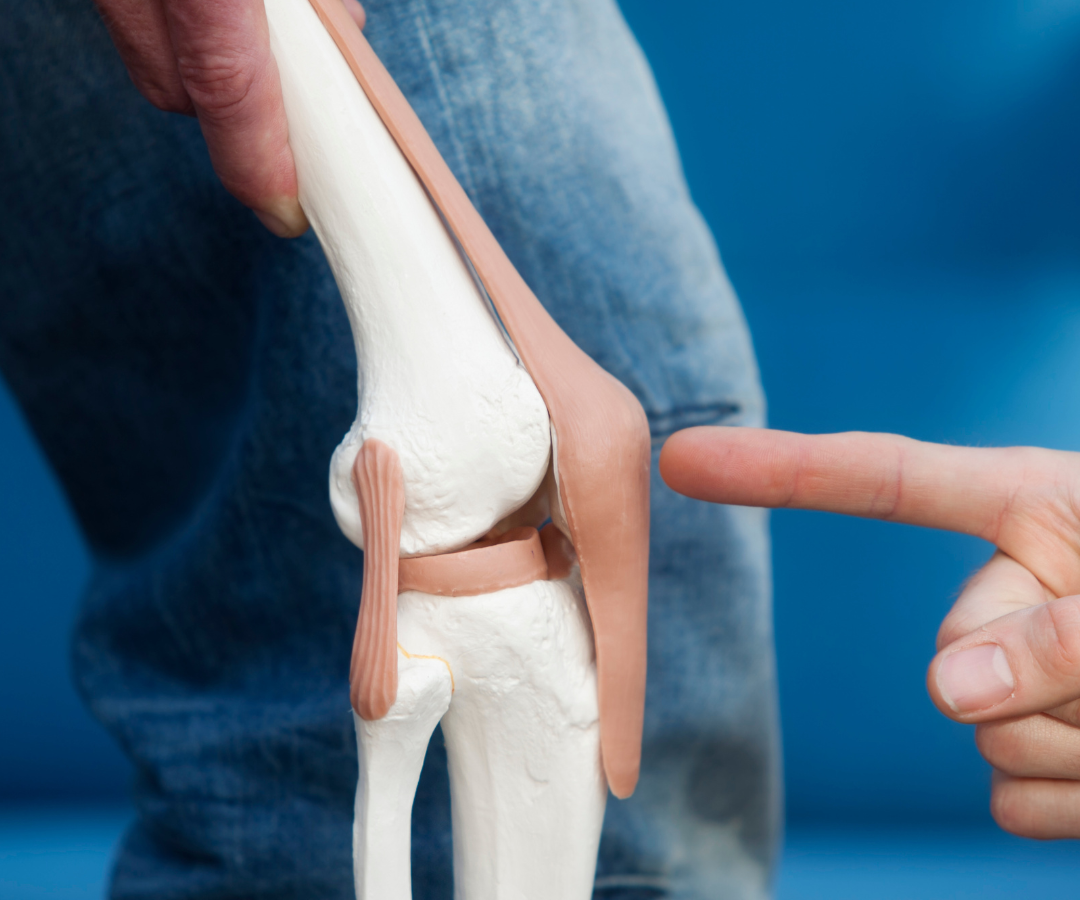
The knee has three major compartments: the medial compartment on the inside, the lateral compartment on the outside and the patellofemoral compartment at the front. The right operation depends on which compartments are damaged and whether the ligaments are stable.
In total knee replacement, the damaged surfaces of the knee are resurfaced more comprehensively. In partial knee replacement, also called unicompartmental knee replacement, only one damaged compartment is resurfaced while the healthy cartilage, bone and ligaments are preserved.
Who may be suitable for partial knee replacement?
Partial knee replacement can be a strong option when arthritis is limited to one compartment, the ligaments are working well and the knee is not severely stiff or unstable. Because more natural knee tissue is preserved, suitable patients may experience a more natural-feeling knee and faster early recovery.
It is not right for everyone. If arthritis is widespread, the knee is very stiff, or the ligaments are damaged, total knee replacement may be safer and more durable.
Benefits and tradeoffs of partial knee replacement
Partial knee replacement has real advantages for the right patient, but it also needs honest counselling. It can recover faster than total knee replacement, but arthritis can later develop in the unreplaced compartments.
Smaller operation for selected one-compartment arthritis
Less bone removal
Healthy ligaments and cartilage preserved
Often less early pain and faster rehabilitation
Often a more natural-feeling knee
Potential need for further surgery if arthritis progresses elsewhere
Requires careful patient selection and accurate diagnosis
How Dr. Raheja chooses the right knee replacement
A good knee replacement decision starts with mapping the pain to the joint damage. Dr. Raheja examines knee movement, ligament stability, deformity, walking pattern and X-rays before recommending total or partial knee replacement.
The goal is to choose the operation that gives dependable pain relief, stable walking and long-term function, rather than using the same solution for every arthritic knee.
Which compartment is damaged?
Is the knee bowed or knocked inward?
Are the ligaments stable enough for partial replacement?
How much stiffness is present before surgery?
Is the pain truly from knee arthritis or partly from spine, hip or nerves?
What recovery timeline does the patient need for home, work and travel?
Knee replacement recovery time
Recovery after knee replacement takes active participation. Most patients start walking with support soon after surgery, using a walker, crutches or walking stick as advised. Physiotherapy is important because knee motion and muscle strength must be rebuilt gradually.
Partial knee replacement often has a shorter recovery than total knee replacement. Total knee replacement recovery can take several months, although many patients feel meaningful improvement in pain and walking within the first few weeks.
Early phase: pain control, swelling control and assisted walking
First few weeks: wound care, knee bending and straightening exercises
Around 6 weeks: many patients progress walking support and daily independence
6 to 12 weeks: many patients return to suitable work depending on job demands
Several months: strength, stamina and confidence continue to improve
Long term: low-impact activity is encouraged, while high-impact stress should be limited
Walking, stairs and daily life after surgery
Patients often ask when they can walk after knee replacement. Walking usually starts early with support, but the exact pace depends on pain control, balance, muscle strength, wound healing and whether the surgery was partial or total.
Stairs, driving, office work, travel and household tasks should be planned before surgery. A safe home setup, firm chairs, clear walking paths and family support can make the first few weeks much easier.
Knee replacement surgery cost in Delhi
Knee replacement surgery cost in Delhi varies because the operation is not the same for every patient. The final estimate depends on total versus partial replacement, one knee versus both knees, implant choice, hospital category, room type, medical fitness, investigations, medicines, insurance and physiotherapy.
Online cost ranges can be useful for broad comparison, but they should not replace a case-specific estimate. The right discussion should include what is covered in the package, implant type, hospital stay, physiotherapy, follow-up and possible extra costs.
Preparing for knee replacement
Preparation improves recovery. Before surgery, patients should control diabetes or blood pressure, discuss blood thinners, treat dental or skin infections, strengthen the leg as much as possible and plan help at home.
Simple home changes matter: remove loose rugs, keep commonly used items within reach, arrange a firm chair with arm support, prepare the bathroom safely and keep a walker-friendly path from bed to toilet.
Life after knee replacement
A knee replacement is designed to reduce arthritis pain and help with comfortable daily movement. Most patients aim to return to walking, travel, stairs, social activity and low-impact exercises such as cycling or swimming.
The new knee may not feel exactly like a natural young knee. Some patients notice clicking, numbness near the incision or difficulty kneeling. These details should be discussed openly so expectations are realistic.
Book a knee assessment
If knee pain is limiting daily life, the useful first step is a clear assessment, not rushing straight to surgery. Dr. Anil Raheja can help you understand whether your knee needs non-surgical care, partial knee replacement, total knee replacement or another treatment route.
Bring recent X-rays, MRI reports if available, details of medicines or injections already tried and a note of your walking, work and home needs.
Frequently asked questions
The appropriate doctor for knee replacement surgery is one who evaluates the arthritis pattern carefully, explains total versus partial replacement, uses reliable implants and gives a structured recovery plan. Dr. Anil Raheja has 30+ years of orthopaedic experience and treats knee arthritis with both total and partial knee replacement where appropriate.
Knee replacement may be needed when severe arthritis, deformity or injury causes persistent pain, stiffness, swelling, sleep disturbance, reduced walking distance or difficulty with stairs despite medicines, physiotherapy, injections and lifestyle changes.
In total knee replacement, the major damaged surfaces of the knee are resurfaced. In partial knee replacement, only one damaged compartment is replaced while healthy cartilage, bone and ligaments are preserved. Partial replacement is suitable only for selected patients with arthritis limited to one compartment.
You may be a candidate if arthritis is limited to one compartment, the ligaments are stable, the knee is not severely stiff and the pain location matches the X-ray findings. A clinical examination and standing X-rays are needed to decide.
Recovery varies by age, fitness, total versus partial replacement and rehabilitation. Many patients start walking with support soon after surgery, improve over the first few weeks and continue gaining strength for several months. Partial knee replacement often recovers faster than total knee replacement.
The cost depends on total versus partial replacement, one knee versus both knees, implant type, hospital, room category, investigations, medicines, insurance and physiotherapy. A reliable estimate is given after examination and X-ray review.
Robotic systems can help with planning and precision in some settings, but the most important factors remain correct diagnosis, surgeon experience, implant selection, alignment, soft-tissue balance and rehabilitation. Not every patient needs robotic knee replacement.
Most patients begin assisted walking soon after surgery, depending on pain control, balance, medical fitness and surgeon instructions. A walker, crutches or stick may be used in the early recovery period.
Modern knee replacements can last many years, and some reliable patient resources describe survival of 20 years or more in many cases. Longevity depends on implant quality, alignment, body weight, activity level, bone health and whether complications occur.
Risks can include infection, blood clots, stiffness, persistent pain, implant loosening, instability, fracture, numbness around the scar or need for revision surgery. Careful planning, medical optimisation, experienced surgery and physiotherapy reduce these risks.
Plan this visit
Plan your knee replacement consultation
Three choices help make the consultation focused and the recovery plan more practical.
What is limiting you most?
Choose the closest pattern.
Ask the surgeon
Questions about knee replacement?
Costs, recovery time, whether surgery is even needed in your case. Send your question and get a call back within one working day.