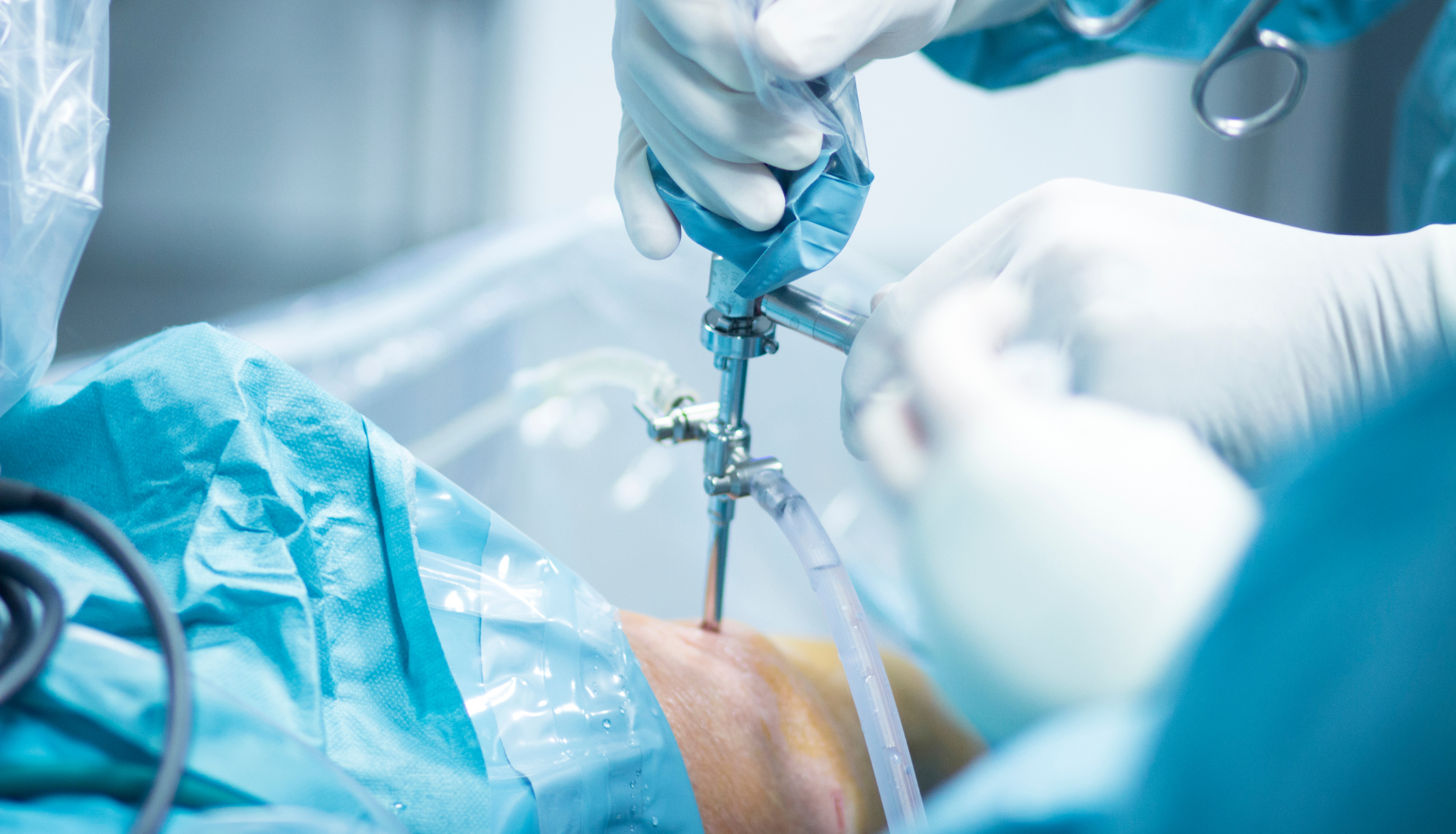

If knee arthritis has started affecting your walking, stairs, sleep or everyday activities, your orthopaedic surgeon may discuss knee replacement surgery. One of the most common questions patients have is whether they need a partial knee replacement or a total knee replacement. These are not simply two different sizes of the same operation. They are used for different patterns of damage inside the knee.
What Is the Difference Between Partial and Total Knee Replacement?
A partial knee replacement replaces only the damaged compartment of the knee. A total knee replacement replaces the damaged joint surfaces across the knee when arthritis is more widespread.
The knee has three main compartments: the medial compartment on the inner side, the lateral compartment on the outer side and the patellofemoral compartment behind the kneecap. If arthritis is limited mainly to one compartment, partial knee replacement may be considered. If arthritis affects multiple parts of the knee, total knee replacement may be more appropriate.
- Partial knee replacement: Replaces the damaged compartment while preserving healthy parts of the knee when appropriate.
- Total knee replacement: Replaces the damaged surfaces across the knee when arthritis is more widespread.
When Is Partial Knee Replacement Considered?
Partial knee replacement may be considered when arthritis is mainly limited to one compartment of the knee and the rest of the joint is relatively healthy. The surgeon also evaluates knee movement, stability, alignment and the condition of the ligaments before recommending this procedure.
- Arthritis is mainly limited to one compartment of the knee.
- Pain is coming from the damaged compartment.
- The remaining parts of the knee are relatively healthy.
- The knee has suitable movement and stability.
- The symptoms continue despite appropriate non-surgical treatment.
When Is Total Knee Replacement Needed?
Total knee replacement is generally considered when arthritis or other joint damage affects a larger part of the knee and causes significant pain and loss of function. Patients may have difficulty walking, climbing stairs, getting up from a chair, exercising or sleeping because of knee pain.
Before recommending surgery, the surgeon considers the severity and location of the arthritis, symptoms, knee function, examination findings and response to other treatments.
Which Is Better: Partial or Total Knee Replacement?
There is no single answer to whether partial or total knee replacement is better. The appropriate procedure depends on the condition of your knee.
Partial knee replacement preserves more of the patient's natural knee when the disease is appropriately localized. It can offer advantages such as a smaller surgical area and potentially faster recovery. However, it is only suitable when the pattern of arthritis and condition of the knee meet the requirements for partial replacement.
Total knee replacement is used when damage is more widespread. It allows the surgeon to address arthritis affecting multiple parts of the knee during the same procedure.
Does the X-ray Decide Which Knee Replacement You Need?
X-rays are an important part of planning knee replacement, but the decision should not be based on an X-ray alone. Your symptoms, physical examination, knee movement, stability, alignment and the location of the arthritis also matter.
This is particularly important when considering partial knee replacement because the procedure depends on whether the arthritis is appropriately limited to one compartment.
Partial Knee Replacement Recovery vs Total Knee Replacement Recovery
Recovery depends on the procedure, your general health and the rehabilitation plan. Partial knee replacement can have a faster recovery in appropriately selected patients because less of the knee is replaced. Total knee replacement may require a longer rehabilitation period as more of the joint is treated.
In both procedures, early movement, physiotherapy and gradual strengthening are important parts of recovery. Your surgeon will advise you about walking, exercises, driving, work and returning to physical activities.
Can You Avoid Knee Replacement Surgery?
Knee replacement is not the first treatment for every person with arthritis. Depending on the severity of the condition, treatment may include weight management when appropriate, physiotherapy, strengthening exercises, activity modification, medicines and selected injections.
Surgery may be discussed when pain and stiffness continue to interfere with everyday activities despite appropriate non-surgical treatment.
What Should You Ask Your Orthopaedic Surgeon?
- Is my arthritis limited to one part of the knee or affecting multiple compartments?
- Could partial knee replacement be an option in my case?
- Why would you recommend partial or total knee replacement?
- What can I expect from recovery?
- What non-surgical treatments can I try before surgery?
The Bottom Line
Partial and total knee replacement are designed for different patterns of knee damage. Partial knee replacement may be an option when arthritis is limited to one compartment and the rest of the knee remains suitable for the procedure. Total knee replacement is generally considered when arthritis affects more extensive areas of the joint. A detailed examination and appropriate imaging can help determine which treatment is suitable for your knee.
Frequently asked questions
Partial knee replacement replaces the damaged compartment of the knee while preserving appropriate healthy structures. Total knee replacement is used when damage affects multiple parts of the knee.
Neither procedure is better for every patient. Partial knee replacement may be suitable when arthritis is limited to one compartment, while total knee replacement may be more appropriate when arthritis is more widespread.
Possibly. Partial knee replacement may be considered when arthritis is mainly limited to one compartment and the remaining knee structures are suitable for the procedure.
Recovery can be faster after partial knee replacement in appropriately selected patients, although the actual recovery time varies depending on the patient and the procedure.
Age alone does not determine which procedure is appropriate. The location and extent of arthritis, knee stability, symptoms, activity level and overall health are important factors.
Originally published on dranilraheja.com.