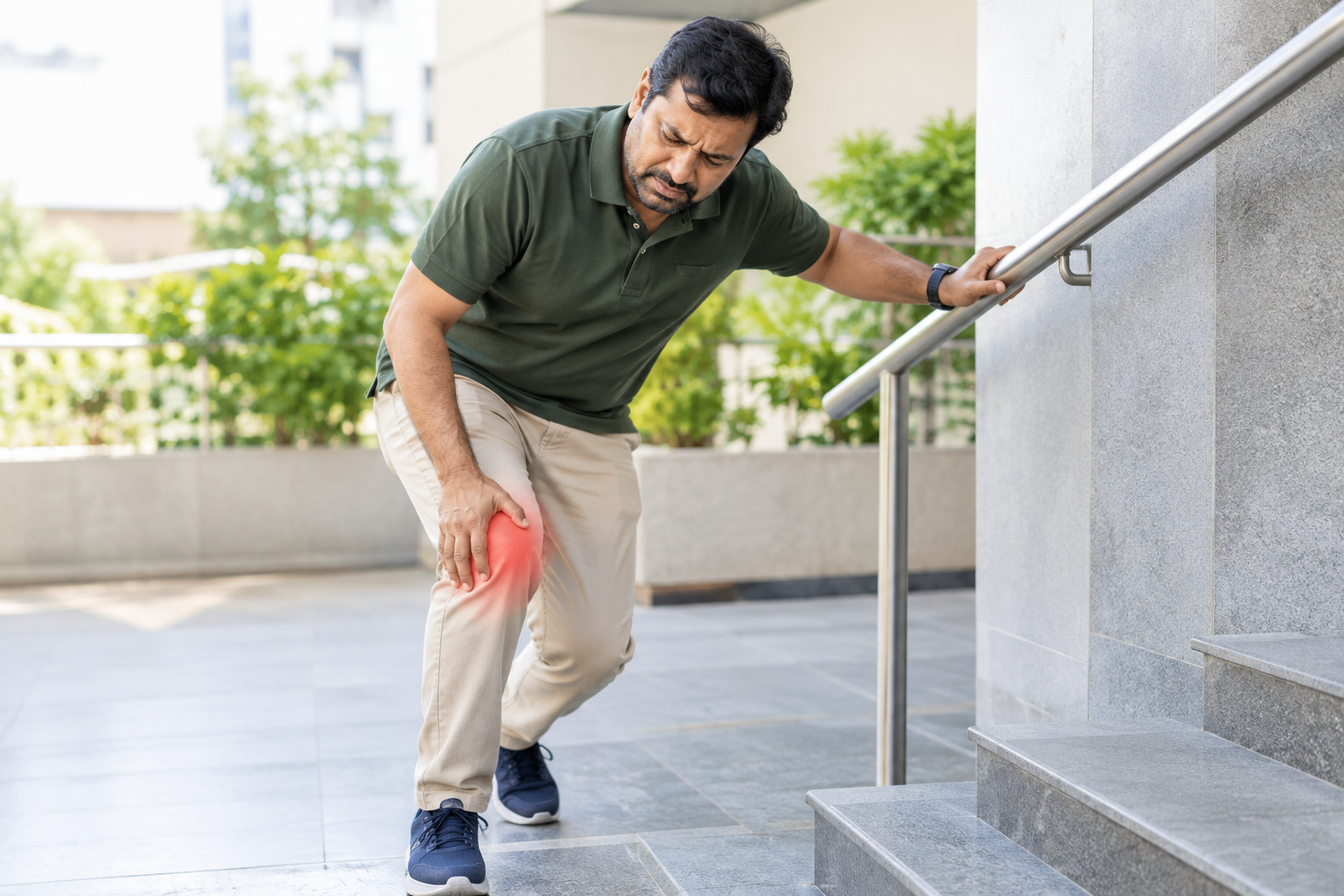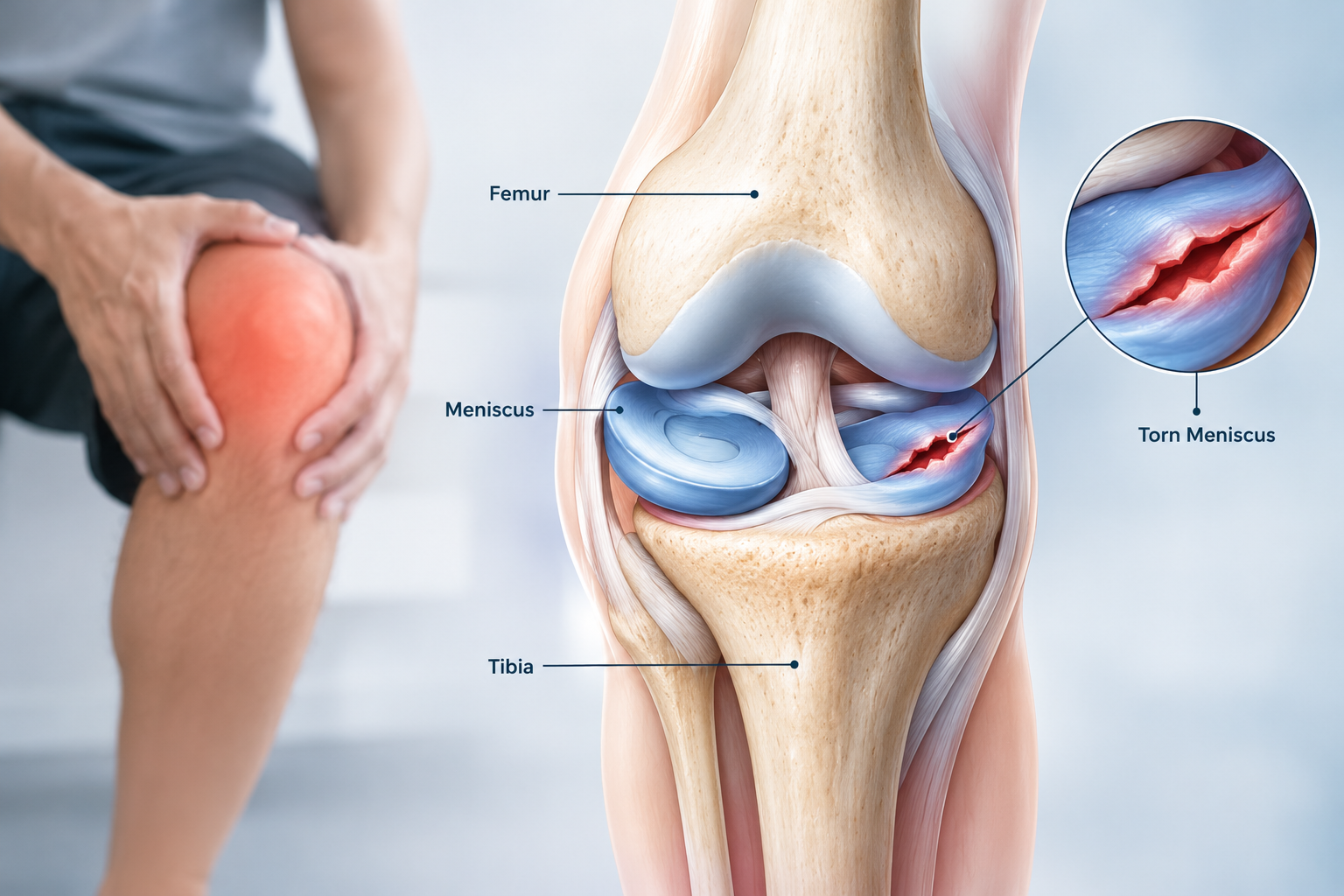
The meniscus is a tough, C-shaped piece of cartilage inside the knee that helps absorb shock, distribute body weight and support joint stability. Each knee has a medial meniscus on the inner side and a lateral meniscus on the outer side. A tear can occur during a sudden twisting movement or develop gradually as the tissue changes with age. Symptoms range from mild discomfort to swelling, restricted movement and difficulty bearing weight. The right treatment depends on the tear's location, pattern, severity, associated injuries and the patient's activity level.
What Is a Meniscus Tear?
A meniscus tear occurs when the cartilage cushion between the thighbone and shinbone becomes damaged. The menisci help the knee cope with everyday activities such as walking, climbing stairs, running and turning.
Tears may be described by their shape and location. Some are small and stable, while others can displace tissue and interfere with normal knee movement. The outer portion of the meniscus has a better blood supply than the inner portion, which can influence its potential to heal.
Not every meniscus tear causes symptoms, particularly when it develops gradually. A scan finding should therefore be interpreted alongside the person's symptoms and physical examination.
Common Symptoms of a Torn Meniscus
Symptoms depend on the type of tear and whether other structures in the knee are injured. Common symptoms include pain along the inner or outer side of the knee, swelling, stiffness, tenderness and difficulty bending or straightening the leg fully.
Some people notice clicking, catching or a sensation that the knee is giving way. A displaced tear may cause the knee to become mechanically locked, making it difficult or impossible to straighten completely.
Swelling may develop over several hours rather than immediately after the injury. Symptoms can also become more noticeable during squatting, twisting, pivoting or climbing stairs.
Severe pain, a visibly deformed knee, inability to bear weight or a hot, red joint with fever requires prompt medical assessment because other significant injuries or conditions may be responsible.
What Causes a Meniscus Tear?
A meniscus can tear when the knee twists while the foot remains planted, particularly during sports that involve sudden turns, pivots or changes of direction. A tear may occur alongside an anterior cruciate ligament injury or other knee damage.
Meniscal tissue also changes with age and can become more vulnerable to tearing. In these cases, an ordinary movement such as rising from a squat may trigger symptoms even without a major accident.
Your age, activity history, previous knee injuries and the circumstances in which symptoms started can help the orthopaedic specialist understand the likely cause.
How Is a Meniscus Tear Diagnosed?
Diagnosis usually begins with a discussion of how the injury occurred, where the pain is located and whether swelling, catching or restricted movement has developed. The clinician examines knee tenderness, range of motion, stability and other signs of injury.
Specific physical examination manoeuvres may help identify a meniscal injury, but no single test is definitive in every patient. The findings are considered together with the symptoms and medical history.
X-rays may be used to assess bones and look for osteoarthritis or other causes of pain, although they do not directly show a meniscus tear. MRI can provide detailed images of the menisci and other soft tissues and may be recommended when the diagnosis is uncertain or the result would influence treatment.
Not everyone with knee pain needs an MRI. The decision depends on the examination, symptom pattern, age, suspected injury and whether imaging would change the management plan.
Meniscus Tear Treatment Without Surgery
Many meniscus tears can initially be managed without an operation, particularly when symptoms are manageable and the knee is not locked. Treatment may include temporarily modifying painful activities, applying ice with a protective cloth, and following a clinician-guided rehabilitation plan.
Physiotherapy can help restore knee movement, improve strength in the surrounding muscles and build control during everyday activities. Progression should be tailored to the injury and the patient's response rather than based on a fixed exercise routine.
A healthcare professional may recommend suitable pain relief after considering medical history, other medicines and possible side effects. Medication should not be used to push through worsening pain or return to sport too early.
Conservative treatment may reduce pain and improve function, although it does not mean every structural tear has healed. Follow-up is important if swelling, catching or limitations persist.
When Is Meniscus Surgery Needed?
Surgery may be considered when symptoms persist despite appropriate non-surgical treatment, the knee is mechanically locked, or the tear has features that may benefit from repair. The decision depends on the tear's location and pattern, tissue quality, associated injuries and the patient's goals.
Arthroscopy is a minimally invasive procedure in which a surgeon uses a small camera and specialised instruments to assess and treat selected knee problems. When the tear is suitable, meniscus repair uses sutures or specialised devices to reattach the damaged tissue.
If repair is not suitable, a surgeon may recommend removing only the unstable damaged portion, known as partial meniscectomy. Preserving as much healthy meniscal tissue as possible is generally important because the meniscus helps protect the joint's cartilage.
Surgery is not automatically required just because an MRI shows a tear. Some degenerative tears can be managed with exercise-based rehabilitation and other non-surgical care. An orthopaedic specialist can explain the expected benefits, limitations and risks of each option.
Recovery After a Meniscus Tear
Recovery depends on the tear, the treatment chosen and whether other knee structures are injured. People receiving non-surgical care may gradually return to normal activities as swelling decreases, movement improves and strength returns.
Recovery after meniscus repair usually takes longer than recovery after removal of a small unstable fragment because the repaired tissue needs time to heal. Crutches, restrictions on weight-bearing or limits on knee bending may be required for a period determined by the surgeon.
Return to running, sports or heavy physical work should be based on pain, swelling, range of motion, strength, control and professional clearance rather than a calendar date alone.
How Can You Reduce the Risk of Another Meniscus Injury?
No prevention strategy can eliminate every meniscus injury, but sensible training and movement habits may reduce avoidable risk. Build exercise intensity gradually, strengthen the muscles around the hips and knees, and practise controlled landing and turning techniques when appropriate.
Warm up before vigorous activity and avoid sudden increases in training load. If knee pain or swelling develops during exercise, reduce the activity and seek advice if symptoms persist or movement becomes restricted.
When Should You See an Orthopaedic Specialist?
Arrange an assessment if knee pain or swelling persists after a twisting injury, the knee repeatedly catches or gives way, or you cannot regain normal movement. An examination can help distinguish a meniscus tear from ligament injuries, cartilage problems and other causes of knee pain.
Seek urgent medical care if the knee becomes locked, you cannot bear weight after a significant injury, the joint looks deformed, or severe swelling or fever develops. Early assessment helps identify injuries that need timely treatment.
Frequently asked questions
Some tears, especially those in areas with a better blood supply, may heal or become less symptomatic with appropriate management. Many people improve with activity modification and physiotherapy. Whether a tear can heal depends on its location, pattern and severity.
No. A clinician may diagnose or suspect a meniscus injury through the history and physical examination. MRI is considered when additional detail is needed and the result is likely to influence treatment.
A locked knee is one that cannot fully straighten or move normally, sometimes because displaced tissue is obstructing movement. A newly locked knee after an injury needs prompt medical assessment.
No. Treatment depends on the type of tear, symptoms, age, activity level and associated injuries. Many tears can initially be managed without surgery, while selected tears may benefit from an operation.
Recovery varies. Mild symptoms treated without surgery may improve over several weeks, while recovery after a meniscus repair can take several months. The timeline depends on the injury and the rehabilitation plan.
Some people can walk with a meniscus tear, while others have pain, swelling or restricted movement. Avoid activities that worsen symptoms and seek medical advice if you cannot bear weight, the knee locks or pain is severe.
Originally published on dranilraheja.com.