
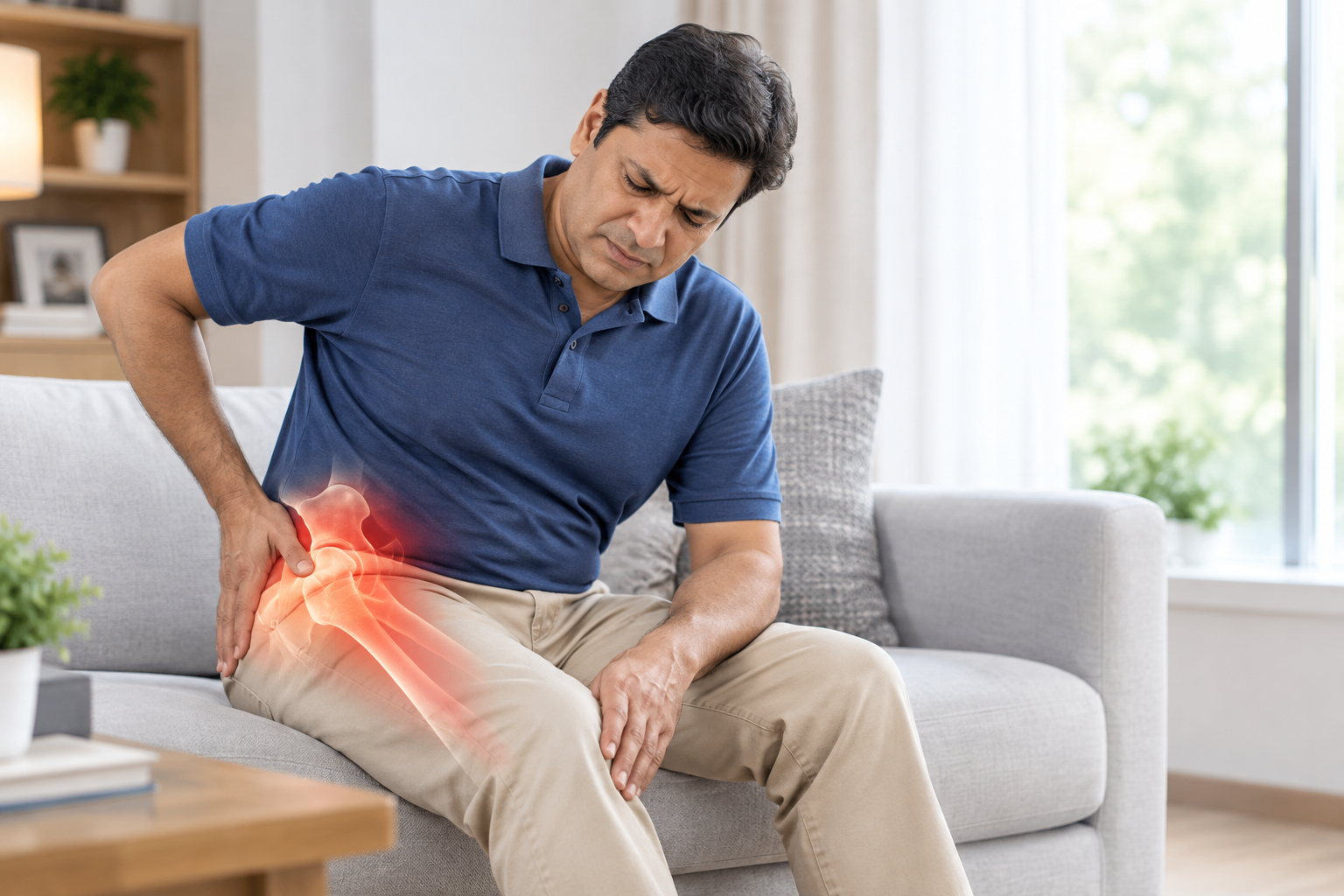
Hip pain that spreads into the groin or thigh can make walking, climbing stairs, standing up and even resting uncomfortable. The discomfort may begin gradually or develop after an injury or an increase in physical activity. Because several conditions can produce similar symptoms, understanding the location and pattern of the pain is an important first step towards identifying its cause.
Why Can Hip Pain Spread to the Groin or Thigh?
The hip is a ball-and-socket joint formed by the head of the thigh bone and the socket in the pelvis. Cartilage, muscles, tendons, ligaments and surrounding nerves work together to support movement and body weight.
Pain arising from the hip joint is frequently felt in the groin and may extend into the front or side of the thigh. Pain around the outer hip may involve the surrounding tendons or bursae. Discomfort extending down the leg can sometimes originate from the lower back or irritated nerves rather than the hip itself.
The location of the pain can provide useful clues, but it cannot establish a diagnosis on its own. The onset, severity, associated symptoms and movements that aggravate the pain also matter.
Common Causes of Hip Pain Radiating to the Groin or Thigh
Hip osteoarthritis: Wear and changes in the cartilage can cause pain deep within the hip or groin, stiffness and difficulty with movements such as putting on shoes, climbing stairs or getting into a car. Symptoms may become more noticeable with activity.
Hip flexor or muscle strain: The muscles that help lift and move the thigh can become strained following exercise, sudden movements or repetitive activity. Pain may increase when lifting the knee, stretching the hip or walking.
Tendon-related pain: Irritation of the tendons around the hip can cause discomfort during movement. Pain on the outer side of the hip, particularly when lying on that side, may be associated with greater trochanteric pain syndrome, which can involve the gluteal tendons and nearby structures.
Hip bursitis: Irritation of a fluid-filled sac near the outer hip can cause local tenderness and discomfort when walking, climbing stairs or lying on the affected side. Similar symptoms may also arise from tendon problems, so assessment is important.
Labral or other joint problems: The labrum is a ring of cartilage around the hip socket. A labral injury or certain structural hip conditions may cause groin pain, clicking, catching or discomfort with twisting and deep hip movements.
Referred pain from the lower back: Problems affecting spinal joints, discs or nerves can produce pain in the buttock, hip or thigh. Tingling, numbness or pain travelling further down the leg may suggest nerve involvement.
Fracture or significant injury: A fall, accident or other injury can damage the bones or soft tissues around the hip. In older adults, a hip fracture can occasionally occur after a relatively minor fall. Sudden severe pain and difficulty bearing weight require urgent medical assessment.
Symptoms That May Help Identify the Cause
Groin pain that worsens with hip rotation or weight-bearing activity may be associated with a problem inside the hip joint. Stiffness after periods of rest and difficulty performing everyday movements can occur with hip osteoarthritis.
Pain on the outer side of the hip may be more noticeable when lying on the affected side, walking uphill or climbing stairs. Pain following exercise or a sudden movement may indicate a muscle or tendon injury.
Burning pain, tingling, numbness or discomfort travelling down the leg may indicate involvement of a nerve or the lower back. These patterns overlap, however, and should not be used to diagnose a condition without an appropriate assessment.
Seek urgent medical attention if severe hip pain begins suddenly, you cannot stand or bear weight, or the pain follows a significant fall or injury. A hot or swollen joint accompanied by fever or feeling generally unwell also requires urgent evaluation.
How Is Hip Pain Diagnosed?
An orthopaedic assessment usually starts with a discussion of when the pain began, where it travels, which activities make it worse and whether there has been an injury. The doctor may also ask about stiffness, back pain, numbness and other relevant medical history.
A physical examination may include checking your walking pattern, hip movement, strength, tenderness and the response to specific movements. The lower back and nearby joints may also be examined when referred pain is suspected.
X-rays can help identify osteoarthritis, fractures and certain structural changes. MRI may be considered when a soft-tissue injury, labral problem or another condition requires further investigation. Other tests may be appropriate depending on the suspected cause. Not every patient needs advanced imaging.
Treatment Options for Hip Pain
Treatment depends on the underlying diagnosis, the severity of symptoms, your general health and how much the pain affects daily activities. There is no single treatment suitable for every cause of hip or groin pain.
Activity modification: Temporarily reducing activities that aggravate the pain can help prevent further irritation. Complete inactivity is not usually necessary, but movements that cause significant pain should be avoided until suitable activity levels are established.
Physiotherapy: A supervised exercise programme may help improve hip strength, flexibility, balance and movement control. The exercises should be selected according to the diagnosed condition and adjusted to your tolerance.
Medication: A clinician may recommend suitable pain-relief medication after considering your medical history, other medicines and potential risks. Do not assume that an over-the-counter medicine is appropriate for everyone.
Further treatment: Depending on the diagnosis, additional interventions may be considered when initial treatment does not provide sufficient relief. In selected cases of advanced hip osteoarthritis or significant structural damage, surgery may be discussed. Hip replacement is not required for every patient with radiating hip pain.
When Should You Consult an Orthopaedic Doctor?
Arrange an orthopaedic assessment if hip or groin pain persists, repeatedly returns, limits walking or sleep, or makes routine activities difficult. An assessment is also advisable when the range of hip movement is decreasing or the pain is progressively worsening.
Seek urgent care for sudden severe pain, an inability to bear weight, significant pain after a fall or injury, or hip pain associated with fever and a hot or swollen joint. New leg weakness or changes in bladder or bowel control alongside back or leg pain also require emergency assessment.
Early evaluation can help distinguish a hip joint problem from a muscle, tendon, spinal or other condition and guide appropriate treatment.
Can Hip Pain Radiating to the Thigh Be Prevented?
Not every cause of hip pain can be prevented, but certain habits can support joint and muscle health. Gradually increase exercise intensity, use suitable technique during physical activity and allow adequate recovery between demanding sessions.
Regular movement, appropriate strengthening exercises and maintaining a healthy body weight may help support hip function. If you already have hip pain, choose activities according to your symptoms and follow guidance from your healthcare professional rather than pushing through significant discomfort.
Conclusion
Hip pain radiating to the groin or thigh can have several causes, including osteoarthritis, muscle or tendon problems, injuries and referred pain from the lower back. The location of the discomfort provides clues, but an accurate diagnosis depends on the overall pattern of symptoms and clinical findings.
If hip pain is affecting your mobility, sleep or daily routine, consult an orthopaedic specialist for an appropriate assessment and personalised treatment plan. Prompt evaluation is particularly important when pain is severe, follows an injury or is accompanied by other warning signs.
Frequently asked questions
The hip joint can refer pain into the groin because of the way sensory nerves from the joint transmit pain signals. Hip osteoarthritis and other joint conditions can produce this pattern, but an examination is needed to determine the actual cause.
Yes. Some hip joint conditions cause pain that extends into the front or side of the thigh. Muscle, tendon and lower-back conditions can produce similar symptoms, so the pain pattern alone cannot confirm the diagnosis.
Hip-related pain may worsen with hip rotation, weight-bearing or certain hip movements. Lower-back or nerve-related pain may travel down the leg and sometimes occur with tingling, numbness or weakness. These patterns can overlap, and a clinical assessment can help distinguish the cause.
No. Arthritis is one possible cause, but muscle strains, tendon problems, labral injuries and referred pain from the lower back can also cause hip or thigh discomfort. A healthcare professional can evaluate the symptoms and recommend appropriate tests when needed.
Temporarily modify activities that worsen the pain and avoid forcing painful movements. Depending on the cause, a clinician may recommend appropriate exercises or pain relief. Seek urgent care if the pain is severe, you cannot bear weight or you develop other warning signs.
Seek urgent medical attention for sudden severe hip pain, inability to stand or bear weight, significant pain after a fall or injury, or a hot or swollen joint with fever. New leg weakness or bladder or bowel control changes alongside back or leg pain also require emergency assessment.
Not necessarily. Many causes of hip pain can be managed without surgery. Hip replacement may be considered for selected patients with advanced hip osteoarthritis or other significant joint damage when symptoms remain disabling despite appropriate non-surgical treatment.
Originally published on dranilraheja.com.