Most fractures heal in 6 to 12 weeks, but the honest answer is 'it depends' on which bone broke, whether it needed surgery, and factors like age, nutrition, smoking and diabetes control. A small wrist fracture in a healthy 25-year-old and a hip fracture in a 70-year-old with diabetes are not the same recovery, even though both are called 'a fracture.' What matters more than the calendar is following your specific weight-bearing instructions that single factor causes more delayed healing than almost anything else.
Not all fractures are treated the same way
The first decision after a fracture isn't about timeline it's whether the bone needs a cast or brace, or surgical fixation with plates, screws, or rods. That decision depends on a few factors.
Surgical fixation isn't a sign that something went wrong. For many fracture patterns, it's what allows a patient to move and bear weight sooner than a cast alone would permit which can actually shorten practical recovery time despite involving an operation.
- Displacement whether the broken ends have shifted out of alignment
- Stability whether the fracture pattern is likely to move again once in a cast
- Joint involvement fractures extending into a joint surface often need surgery to restore a smooth, functional joint
- Which bone, and where on it a hairline wrist fracture heals very differently from a displaced fracture through the hip or thigh
The biology behind the timeline
Bone healing happens in overlapping stages, roughly consistent whether or not surgery is involved.
A small wrist or finger fracture is often clinically healed in 4 to 6 weeks. A hip or shinbone fracture, or one that required surgery, often takes 3 to 6 months before full activity resumes, with remodeling continuing well beyond that.
- Inflammation (first few days): Blood collects around the break and forms the scaffold for repair this is the pain-and-swelling phase.
- Soft callus formation (2–3 weeks): Cartilage-like tissue bridges the fracture, giving early, fragile stability.
- Hard callus formation (weeks 4–8, longer in bigger bones): The soft callus is replaced by actual bone, and the fracture starts to feel genuinely stable.
- Remodeling (months, sometimes over a year): New bone is gradually reshaped along normal stress lines, until a scan can barely tell a fracture happened at all.
What actually speeds up or slows down healing
Some factors are outside anyone's control, but several are not.
- Age: Children's bones heal remarkably fast; healing slows progressively with age, particularly past 60.
- Nutrition: Adequate protein, calcium, and vitamin D are directly used to build new bone. Deficiency measurably slows fracture healing.
- Smoking: One of the most significant modifiable factors smoking reduces blood flow to the healing site and is strongly linked to delayed union or non-union.
- Diabetes and blood sugar control: Poorly controlled diabetes slows healing and raises infection risk after surgical fixation worth flagging given how common diabetes is among adults in India, and how often it goes only partially controlled.
- How much the fracture is protected early on: Repeated movement or premature weight-bearing before the soft-callus stage can disrupt healing and, in some cases, cause fixation hardware to fail.
- Following weight-bearing instructions precisely: 'Partial weight-bearing' and 'non-weight-bearing' are specific instructions for a reason deviating from them is one of the most common causes of delayed healing.
Warning signs that recovery isn't on track
Most fractures heal uneventfully, but it's worth knowing what shouldn't be ignored. Any of the signs below are reasons to get reassessed rather than wait for the next scheduled follow-up.
- Pain that is getting worse rather than better after the first week or two
- A limb that looks increasingly swollen, discolored, or feels cold compared to the other side
- Fever, or increasing redness and warmth around a surgical site
- A sensation of grinding, new instability, or visible deformity at the fracture site weeks after it was thought to be healing
- No improvement in pain or function by the expected milestone for that type of fracture
What to actually do
Attend every scheduled follow-up, even once the pain has faded an X-ray at the right interval is how a surgeon confirms the callus is forming on schedule, not just that the pain is gone. If you're managing diabetes, keeping blood sugar controlled during the healing window matters as much as the cast or the surgery itself. If anything on the warning-sign list above applies to you, don't wait for the next appointment book a consultation sooner.
Frequently asked questions
You can't shorten the biological timeline dramatically, but you can avoid slowing it down: eat enough protein, calcium and vitamin D, avoid smoking, keep any chronic condition like diabetes controlled, and follow weight-bearing instructions exactly as given.
It depends entirely on which weight-bearing category your surgeon has assigned non-weight-bearing, partial, or full. Walking on a fracture against instructions can shift the bone out of alignment or damage surgical hardware.
Protein-rich foods (dal, eggs, paneer, fish, chicken), dairy or fortified foods for calcium, and adequate sun exposure or supplementation for vitamin D all support the bone-building phase of healing.
Persistent or worsening pain past the expected timeline, visible deformity, or a grinding/unstable feeling at the fracture site weeks after injury are signs to get reassessed rather than wait.
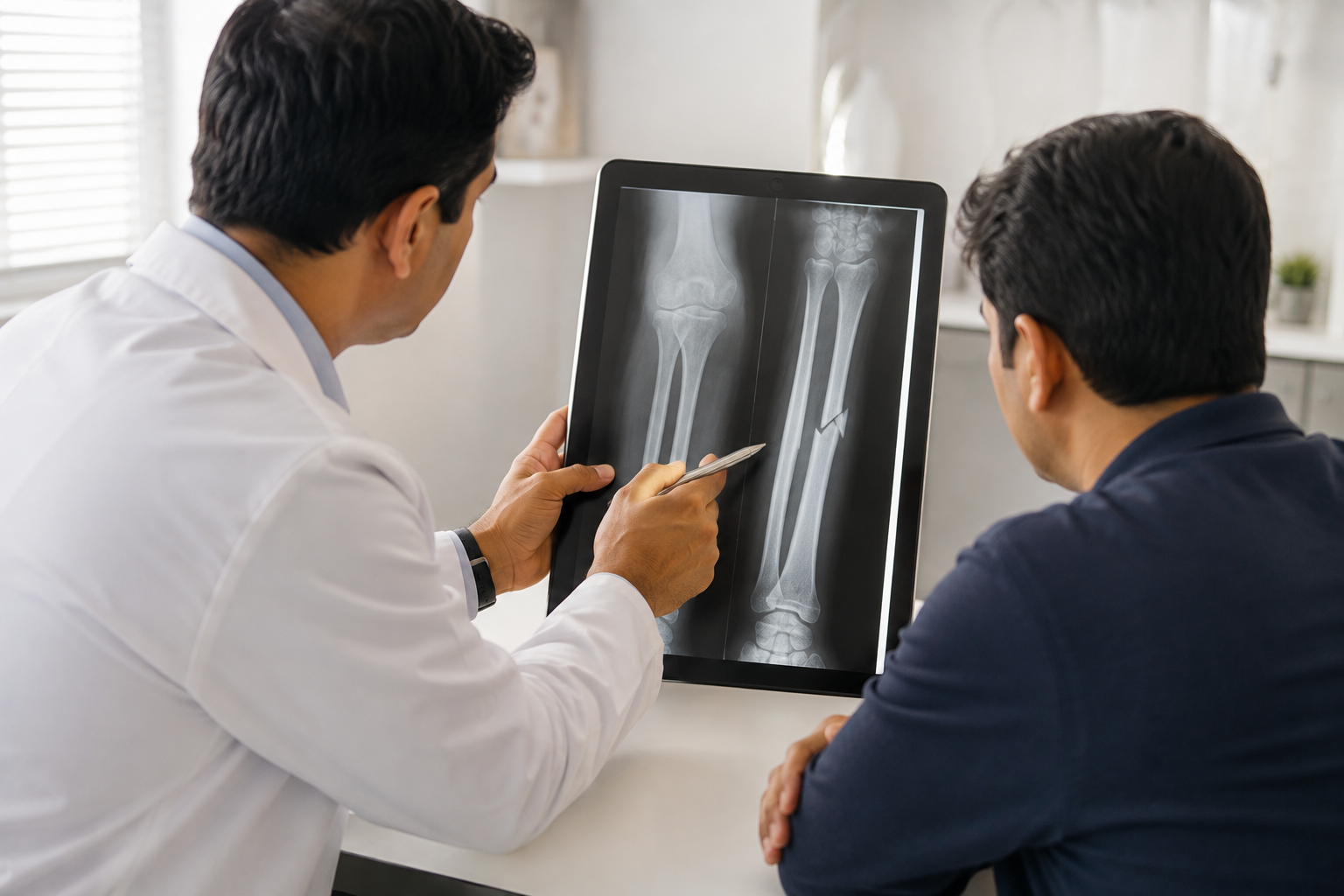
No many fractures, especially those without significant displacement or joint involvement, heal well in a cast or brace alone. Surgery is used when the fracture is unstable, displaced, or involves a joint surface.
This varies more than any other fracture type due to age and bone density, but most patients begin supervised walking within days of surgery, with meaningful functional recovery over 3 to 6 months.
Originally published on dranilraheja.com.