
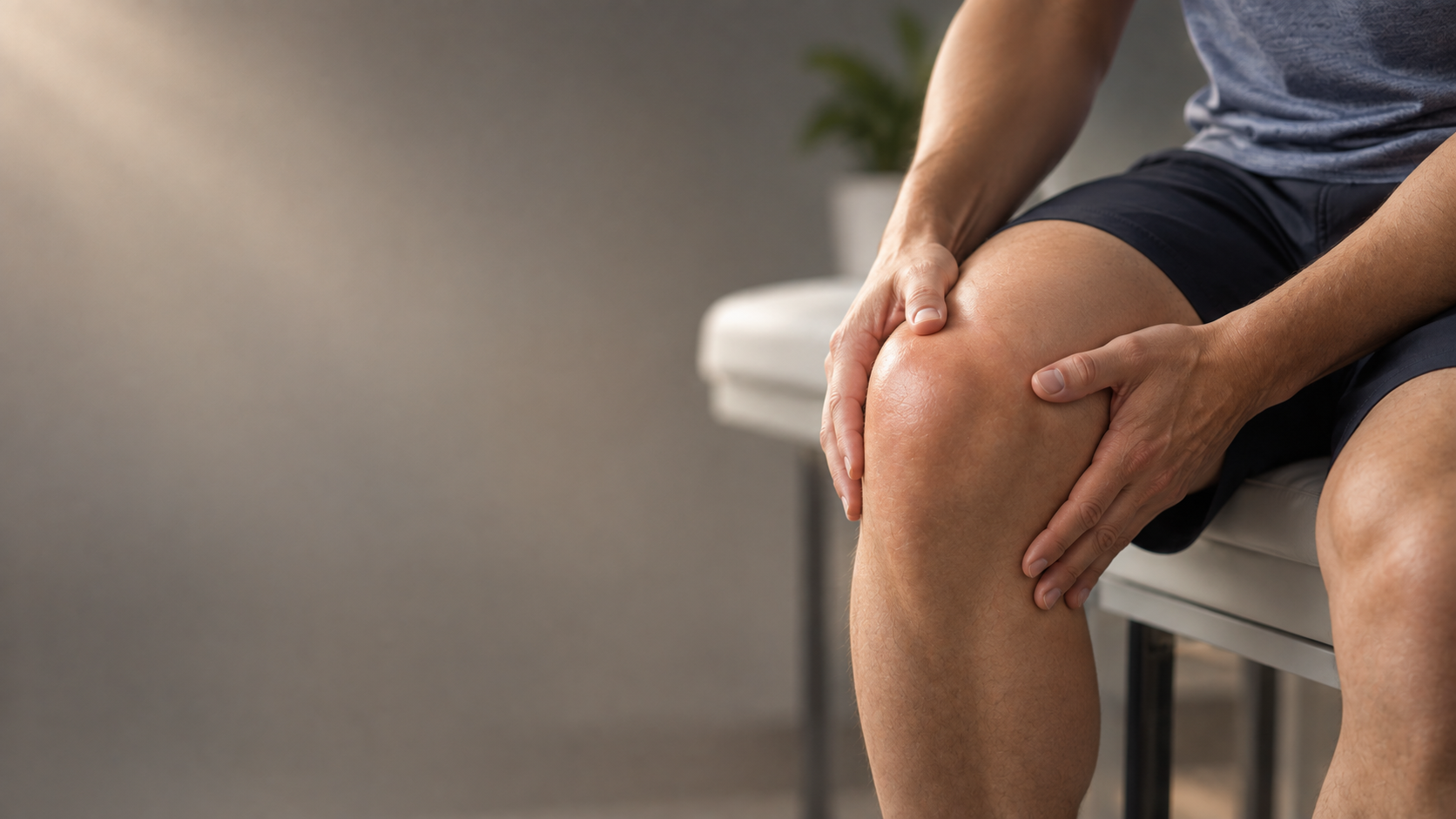
A swollen knee can be concerning, especially when there has been no fall, sports injury or obvious accident. Knee swelling without an injury can happen when excess fluid collects in or around the joint. Arthritis, inflammation, gout, bursitis, infection and other conditions can cause this type of swelling. The pattern of swelling, associated symptoms and examination findings help determine what is causing it and whether further tests are needed.
What does a swollen knee mean?
Knee swelling usually means that there is extra fluid in or around the knee joint. Doctors may describe fluid inside the joint as a knee effusion.
You may notice that the knee looks larger than the other side, feels tight or stiff, or becomes difficult to bend or straighten. Some people have significant pain, while others mainly notice fullness or restricted movement.
The important point is that swelling is a symptom rather than a diagnosis. The cause needs to be identified before deciding how it should be treated.
Why can your knee swell without an injury?
Several conditions can cause knee swelling even when there has been no obvious injury. Some involve gradual wear of the joint, while others cause inflammation or fluid buildup.
Common possibilities include:
- Knee osteoarthritis
- Inflammatory arthritis such as rheumatoid or psoriatic arthritis
- Gout or pseudogout
- Bursitis or inflammation around the knee
- Overuse or increased physical activity
- Meniscus or other internal knee problems that may not have followed a major injury
- Joint infection
- Other less common inflammatory or structural conditions
Can arthritis cause knee swelling?
Yes. Knee osteoarthritis can cause pain, stiffness and episodes of swelling. As the joint changes over time, irritation of the tissues inside the knee can lead to increased fluid and a feeling of fullness or tightness.
Inflammatory forms of arthritis can also cause swelling. These conditions may affect one or several joints and can sometimes cause more noticeable morning stiffness or recurring episodes of inflammation.
A swollen knee should not automatically be assumed to be arthritis, particularly when the swelling is new, sudden or associated with warmth, redness or significant pain.
Can gout cause a swollen knee?
Gout can affect the knee as well as other joints. It occurs when urate crystals build up in a joint and trigger inflammation.
A gout attack can cause sudden swelling, pain, warmth and tenderness. Some people already know that they have gout, while others may experience a first episode without realizing what is causing the symptoms.
If the cause of sudden knee swelling is uncertain, a doctor may need to distinguish gout from other causes, including infection.
What does fluid in the knee mean?
The phrase 'fluid in the knee' is commonly used to describe excess fluid within the joint. A small amount of joint fluid is normal because it helps the knee move smoothly, but inflammation or irritation can cause more fluid to accumulate.
The fluid itself is not necessarily the underlying problem. The reason it has accumulated is more important. Depending on the situation, the doctor may use an examination, imaging or sometimes a sample of the fluid to determine the cause.
Can a swollen knee happen from overuse?
Yes. A sudden increase in walking, running, exercise or other repetitive activity can irritate structures around the knee and lead to temporary swelling.
This can happen even without a specific injury that you can remember. However, recurring swelling after normal activities should not simply be dismissed as overuse, particularly if it is becoming more frequent or is associated with pain, stiffness or reduced movement.
Can a meniscus problem cause knee swelling without a major injury?
A meniscus problem can sometimes develop gradually through degenerative changes rather than one obvious traumatic event. It may cause pain, catching, stiffness or swelling.
The pattern of symptoms matters. If swelling is accompanied by repeated catching, locking, joint-line pain or difficulty fully bending or straightening the knee, an orthopaedic assessment may be useful.
Not every swollen knee is caused by a meniscus problem, so treatment should not be based on the swelling alone.
When is knee swelling a warning sign?
Most causes of knee swelling are not emergencies, but some situations require prompt medical assessment.
Particular attention is needed when the knee becomes hot, red or very painful, especially if you also have fever or feel generally unwell. A joint infection can cause these symptoms and requires urgent medical evaluation.
Sudden severe swelling, inability to move the knee or inability to bear weight also warrants prompt assessment.
- The knee is hot or noticeably red
- You have fever or feel unwell
- Swelling appeared suddenly and is severe
- You cannot move the knee normally
- You cannot put weight on the leg
- Pain is severe or rapidly worsening
- The swelling keeps returning without an obvious explanation
- The knee is swollen along with significant stiffness or loss of function
When should you see an orthopaedic doctor for knee swelling?
A medical assessment is appropriate when swelling persists, keeps coming back or begins interfering with walking and everyday activities.
You should also consider an assessment when you have already tried rest and activity modification but the swelling does not settle, or when swelling is accompanied by persistent pain, stiffness, catching or reduced movement.
How is a swollen knee diagnosed?
The evaluation starts with understanding when the swelling began, whether it comes and goes, whether there was any recent change in activity and what other symptoms are present.
The knee is examined for swelling, warmth, tenderness, range of movement and other signs that may point toward arthritis, inflammation or an internal joint problem.
Depending on the findings, imaging or laboratory tests may be recommended. X-rays can help assess arthritis and other bone changes, while ultrasound or MRI may be useful in selected situations when soft tissues or fluid need further assessment.
In some cases, a sample of joint fluid may be taken for testing. This can help investigate causes such as infection or crystal-related arthritis.
- Discuss when the swelling started and whether it keeps returning
- Review pain, stiffness, warmth, redness and movement
- Check for recent changes in activity or previous knee problems
- Examine the knee and assess its range of movement
- Use X-rays when bone or arthritis-related changes need assessment
- Consider ultrasound or MRI when additional structural information is needed
- Consider joint-fluid testing when infection or crystal arthritis needs to be investigated
How is knee swelling treated?
Treatment depends on what is causing the swelling. Treating the swelling without addressing its underlying cause may only provide temporary relief.
For some mild cases, reducing aggravating activities, allowing the knee to rest and using appropriate symptom-relief measures may be enough while the knee settles.
If arthritis, gout, inflammatory arthritis, bursitis, a meniscus problem or another condition is responsible, treatment needs to be directed toward that diagnosis.
- Activity modification and temporary reduction of aggravating activities
- Physiotherapy and strengthening when appropriate
- Medicines for pain or inflammation when medically appropriate
- Treatment directed at gout or inflammatory arthritis when diagnosed
- Management of knee osteoarthritis
- Treatment of an underlying meniscus or structural problem when required
- Drainage or other procedures in selected cases
Does a swollen knee always need drainage?
No. Not every swollen knee needs to have fluid removed.
In some cases, the swelling improves when the underlying inflammation or joint problem is treated. In other situations, removing fluid may be considered to relieve significant pressure or to help determine the cause of the swelling.
The decision depends on the amount of fluid, symptoms, examination findings and the suspected underlying condition.
Can you treat knee swelling at home?
For mild swelling without concerning symptoms, temporarily reducing activities that aggravate the knee and allowing it to rest may help. Cold therapy may also provide short-term symptom relief.
However, home treatment should not be used to ignore persistent or unexplained swelling. If the knee remains swollen, repeatedly becomes swollen or develops significant pain, warmth or redness, an assessment is appropriate.
What should you avoid when your knee is swollen?
Avoid activities that clearly increase pain or swelling while the cause is being assessed. Continuing high-impact exercise simply to 'work through' a swollen knee can make symptoms harder to settle.
Do not repeatedly force a stiff or swollen knee through painful movements. If swelling is significant or accompanied by severe pain or restricted movement, seek medical advice rather than relying only on home treatment.
The Bottom Line
Knee swelling without an obvious injury can have many causes, including osteoarthritis, inflammatory arthritis, gout, bursitis, overuse and problems inside the joint. The swelling itself does not tell you exactly what is wrong.
If your knee keeps swelling, remains swollen despite rest or becomes painful, hot, red or difficult to move, an orthopaedic assessment can help identify the cause and guide treatment. Early evaluation is particularly important when swelling is sudden or associated with severe symptoms.
Frequently asked questions
Knee swelling without an obvious injury can be caused by osteoarthritis, inflammatory arthritis, gout, bursitis, overuse, meniscus problems or other conditions. Infection is another possible cause that needs prompt assessment when swelling is accompanied by warmth, redness, severe pain or fever.
Common causes include arthritis, gout, inflammation, bursitis, overuse and problems inside the knee joint. The cause cannot be determined from swelling alone, so persistent or unexplained swelling should be assessed.
Yes. Osteoarthritis and inflammatory forms of arthritis can cause fluid buildup, swelling, stiffness and pain in the knee.
Fluid in the knee usually means that excess fluid has collected within or around the joint. It can occur because of arthritis, inflammation, injury, gout, infection or other joint problems.
See a doctor if swelling persists, keeps returning, interferes with walking or is associated with ongoing pain or restricted movement. Seek prompt medical attention if the knee is hot, red, severely painful or you have fever or difficulty bearing weight.
No. Most causes of knee swelling do not automatically require surgery. Treatment depends on the underlying cause and may include activity modification, medicines, physiotherapy, treatment for arthritis or other non-surgical measures.
Originally published on dranilraheja.com.