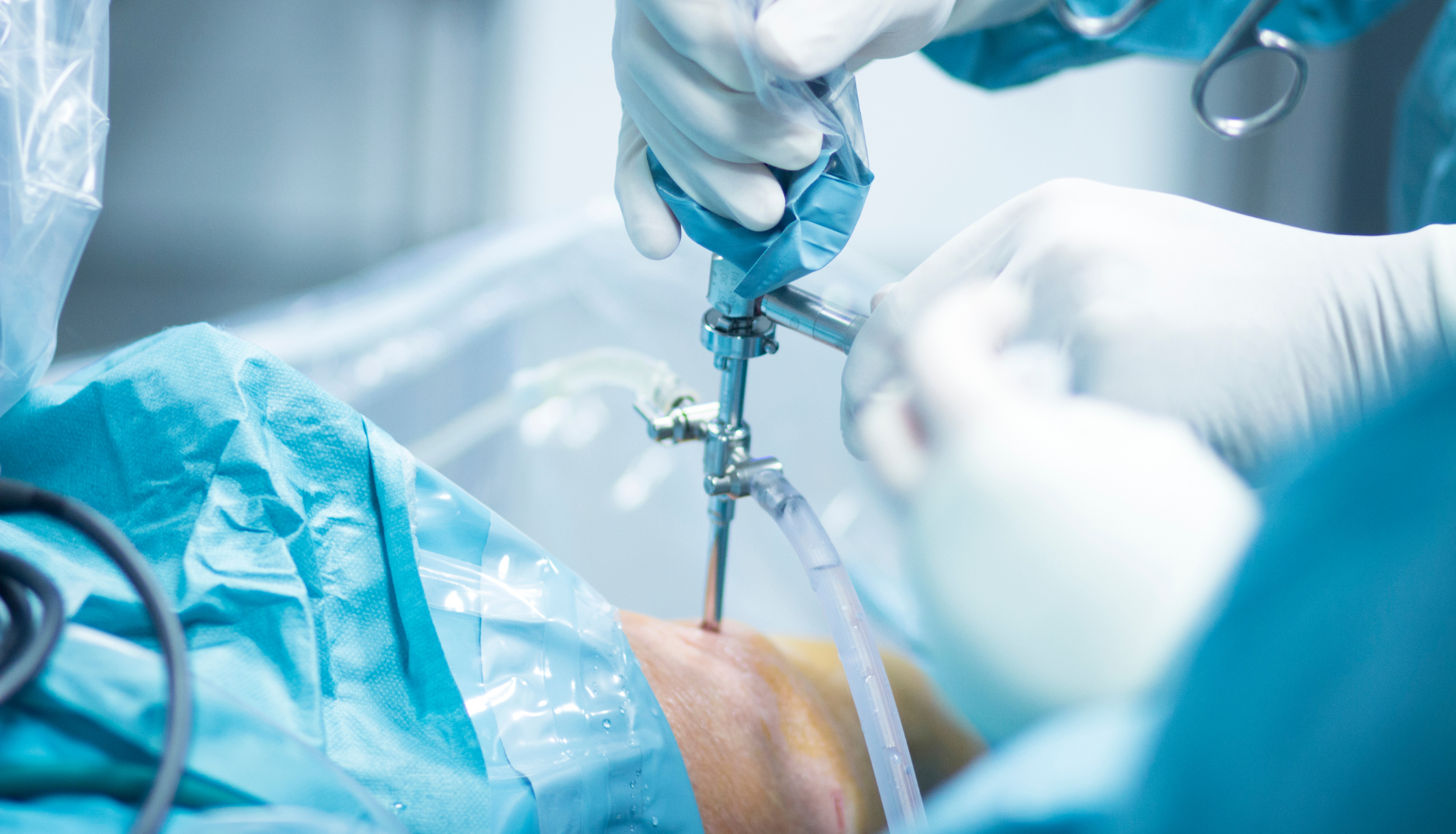

If you have been living with knee pain for months or years, you may eventually hear the words "knee replacement." That can sound like a much bigger decision than it actually is. A diagnosis of knee arthritis, an abnormal X-ray or being above a certain age does not by itself mean that surgery is necessary. Knee replacement is generally considered when pain and stiffness are significantly affecting everyday life and appropriate non-surgical treatments are no longer providing enough relief.
What is knee replacement surgery?
Knee replacement surgery, also called knee arthroplasty, replaces damaged surfaces of the knee joint with artificial components. In a total knee replacement, the damaged surfaces of the femur and tibia are resurfaced with prosthetic components, allowing the joint to move more smoothly.
The most common reason for knee replacement is advanced osteoarthritis. Other conditions can also damage the knee, but the treatment decision depends on the underlying problem, symptoms and the extent of joint damage.
Depending on which parts of the knee are damaged, some patients may be candidates for a partial knee replacement rather than a total knee replacement.
When is knee replacement actually needed?
There is no single pain score, X-ray grade or age at which every patient should have a knee replacement. The decision is individual and usually becomes appropriate when several factors come together.
The most important consideration is whether knee pain and stiffness are substantially affecting your quality of life despite appropriate treatment.
- Persistent knee pain that interferes with walking or routine activities
- Difficulty climbing stairs, standing for longer periods or getting up from a chair
- Pain that interferes with sleep or makes normal daily activities difficult
- Progressive stiffness or loss of knee movement
- Increasing dependence on pain medication or other symptom-relief measures
- Symptoms that continue despite appropriate physiotherapy, exercise, weight management, medication or other non-surgical treatment
- Significant joint damage on imaging that matches the patient's symptoms and functional limitations
Does an X-ray show that you need a knee replacement?
An X-ray is an important part of assessing an arthritic knee, but it is not the only factor used to decide on surgery.
Some people have significant changes on an X-ray but relatively manageable symptoms. Others may have substantial pain and functional limitations that require a detailed clinical assessment even when the imaging findings do not tell the whole story.
The decision should therefore connect three things: what you feel, what you can and cannot do, and what the examination and imaging show.
What should you try before knee replacement?
Knee replacement is generally an elective procedure rather than the first treatment for arthritis. Depending on the severity of symptoms and the patient's overall health, non-surgical treatment may include exercise-based physiotherapy, strengthening, weight management when appropriate, activity modification, medication and selected injections.
The purpose of these treatments is not necessarily to permanently reverse arthritis. Instead, they can reduce pain and improve function and may allow a patient to remain active without surgery for some time.
If these measures no longer provide adequate relief and the knee is significantly limiting daily life, replacement surgery may become a reasonable option to discuss.
Total knee replacement or partial knee replacement?
Not every damaged knee needs the entire joint to be replaced. If arthritis is limited to one compartment of the knee and the rest of the joint and supporting structures are suitable, a partial knee replacement may be considered.
A total knee replacement is used when damage is more extensive and affects multiple parts of the knee.
The choice between partial and total replacement requires an examination and appropriate imaging. It is not determined by pain alone.
Does age determine when you need a knee replacement?
Age is one factor considered during an orthopaedic assessment, but there is no universal age at which knee replacement becomes necessary or inappropriate.
A younger patient with severe joint damage and major functional limitations may need a different treatment discussion from an older patient whose symptoms remain manageable.
The more useful question is whether the condition is significantly affecting your quality of life and whether reasonable alternatives are still controlling the symptoms.
What happens during the evaluation?
A knee replacement consultation usually starts with your symptoms, medical history and the activities that have become difficult. The knee is then examined for movement, alignment, stability and other findings.
X-rays are commonly used to assess the amount and location of joint damage. Additional imaging is not automatically required for every patient and is chosen when it can answer a specific clinical question.
The surgeon then discusses the available options, including continued conservative care, partial replacement or total knee replacement when appropriate.
- Discuss how long you have had symptoms and how they affect daily life
- Review previous treatments and how well they worked
- Examine knee movement, alignment and stability
- Review appropriate X-rays or other imaging
- Discuss non-surgical and surgical options
- Consider your overall health and readiness for surgery
When should you see a knee replacement specialist?
Consider an orthopaedic evaluation if persistent knee pain is affecting walking, stairs, sleep, work or other activities despite reasonable non-surgical treatment.
You do not need to wait until you are unable to walk before discussing your options. An assessment can also clarify whether you actually need replacement surgery or whether another treatment is more appropriate.
The bottom line
Knee replacement is not simply a treatment for an abnormal X-ray. It is considered when knee disease is causing significant symptoms and functional limitations and other appropriate treatments are no longer providing enough relief.
If you are unsure whether your knee has reached the stage where replacement should be considered, a specialist assessment can help determine whether continued conservative care, partial knee replacement or total knee replacement is the appropriate next step.
Frequently asked questions
Knee replacement may be considered when persistent pain, stiffness and loss of function significantly affect daily life and appropriate non-surgical treatments are no longer providing enough relief. An examination and imaging help determine whether replacement is appropriate.
Not necessarily. X-rays show the structural condition of the joint, but the decision for surgery also considers pain, mobility, daily limitations, examination findings and response to treatment.
A total knee replacement replaces the damaged surfaces of the knee more extensively, while a partial knee replacement addresses damage limited to a suitable compartment of the knee. Patient selection is important for partial replacement.
Some patients can manage knee arthritis for years with appropriate non-surgical treatment. Options may include exercise and physiotherapy, weight management when appropriate, medication, activity modification and selected injections. When these no longer control symptoms adequately, surgery may be discussed.
There is no single age that determines whether someone should have a knee replacement. The decision depends more on symptoms, functional limitations, joint damage, overall health and the response to other treatments.
Originally published on dranilraheja.com.