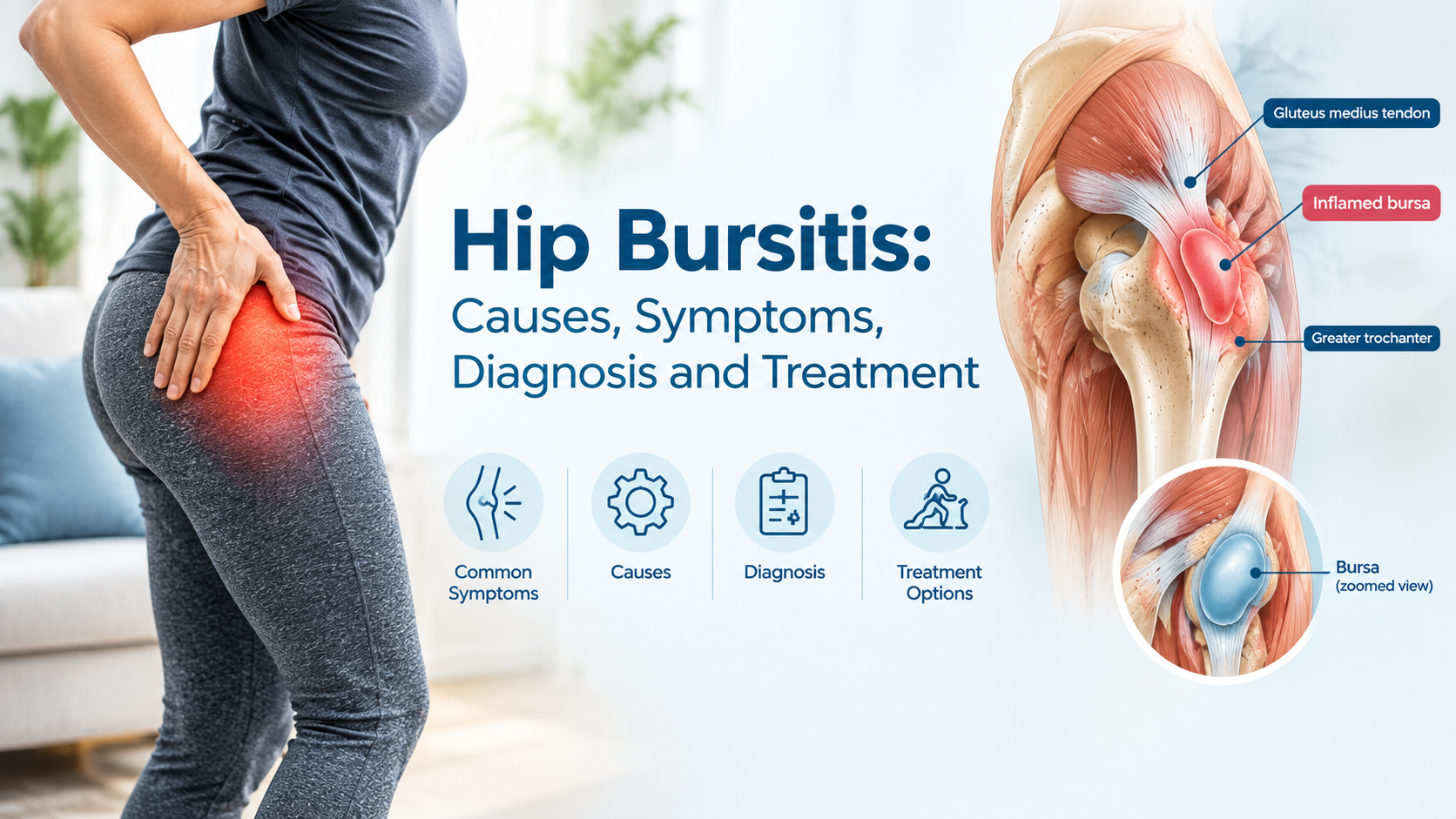
Hip bursitis is a term commonly used for pain associated with irritation of a bursa, a small fluid-filled sac that helps reduce friction between tissues around a joint. Pain around the outer hip may be particularly noticeable when lying on the affected side, walking for long periods or climbing stairs. However, many cases of outer hip pain involve nearby gluteal tendons as well as, or instead of, the bursa. An accurate assessment helps distinguish these problems from arthritis, referred back pain and other conditions so treatment can target the underlying cause.
What Is Hip Bursitis?
Bursae are small sacs containing fluid that help tissues glide over one another with less friction. Around the hip, one of the appropriate-known bursae lies near the greater trochanter, the bony prominence on the outer side of the upper thigh bone.
When this region becomes painful, the condition is often described as trochanteric bursitis. However, pain in this area frequently involves the gluteus medius and gluteus minimus tendons, which help stabilise the pelvis during walking.
Clinicians often use the term greater trochanteric pain syndrome (GTPS) for pain around the outer hip. This broader term includes bursitis, tendon-related problems and related conditions. Treatment may therefore need to address tendon loading and muscle function, not inflammation alone.
Common Symptoms of Hip Bursitis
Symptoms often develop gradually, although they may begin after a fall, a change in activity or repeated stress on the hip. Common features include:
- Pain or tenderness over the outer side of the hip.
- Discomfort when lying on the affected side, particularly at night.
- Pain while walking longer distances or climbing stairs.
- Discomfort when standing on one leg or getting up from a low chair.
- Pain that may extend down the outer thigh, sometimes towards the knee.
- Tenderness when pressing over the bony prominence on the outside of the hip.
What Causes Hip Bursitis?
Pain around the outer hip can develop when tissues are exposed to more load than they can comfortably tolerate. It does not always result from a single injury.
Possible contributing factors include:
- Repetitive activity: A sudden increase in walking, running, stair climbing or other repetitive movements can aggravate the tissues around the hip.
- Direct pressure or injury: Falling onto the side of the hip or repeatedly compressing the area may trigger symptoms.
- Gluteal tendon problems: Irritation or degeneration of the tendons that stabilise the hip is a frequent cause of outer hip pain.
- Muscle weakness or altered movement: Changes in hip and pelvic control may affect how forces are distributed during walking.
- Other musculoskeletal conditions: Back problems, hip arthritis or altered walking patterns may contribute to or mimic symptoms.
Who Is More Likely to Develop Hip Bursitis?
Outer hip pain can affect people with different activity levels and backgrounds. It is commonly seen in middle-aged and older adults and may occur more frequently in women.
People who regularly walk or run long distances, increase exercise intensity quickly or spend prolonged periods putting pressure on the affected side may experience symptoms. Hip muscle weakness and other musculoskeletal conditions can also contribute.
Having one or more risk factors does not mean that bursitis will necessarily develop. The diagnosis depends on the symptoms and clinical examination rather than risk factors alone.
How Is Hip Bursitis Diagnosed?
Diagnosis generally begins with a medical history and physical examination. The orthopaedic specialist may ask where the pain is located, whether it worsens at night, how walking affects it and whether there has been a recent injury or change in activity.
The examination may include checking tenderness over the outer hip, hip movement, strength and pain during selected movements. The lower back and other parts of the hip may also be assessed because pain can be referred from other structures.
Imaging is not always necessary in a typical case. X-rays may be used when arthritis, fracture or another bone problem is suspected. Ultrasound or MRI may be considered when the diagnosis is uncertain, symptoms persist despite treatment or a significant gluteal tendon problem is suspected.
The aim is to identify the source of the symptoms and rule out conditions that need a different treatment approach.
Non-Surgical Treatment for Hip Bursitis
Many people improve with a combination of activity modification, targeted rehabilitation and symptom management. The treatment plan should reflect whether the main problem involves the bursa, the gluteal tendons or another hip structure.
Common approaches include:
- Reduce aggravating pressure: Avoid lying directly on the painful side. A pillow between the knees when sleeping on the opposite side may help if comfortable.
- Modify activity temporarily: Reduce movements that repeatedly aggravate pain while maintaining comfortable everyday activity as tolerated.
- Physiotherapy: A tailored programme can gradually improve hip muscle strength, pelvic control and tolerance for walking and stair climbing.
- Pain relief: A clinician may recommend appropriate medication after considering medical history, kidney and stomach health, other medicines and potential side effects.
- Cold packs: A wrapped cold pack may help relieve local discomfort for short periods. Avoid placing ice directly on the skin.
Can Physiotherapy Help Hip Bursitis?
Physiotherapy is often an important part of managing persistent outer hip pain, especially when the gluteal tendons are involved. The programme may focus on gradually improving strength and the ability of the hip muscles to manage everyday loads.
A physiotherapist may recommend progressive strengthening exercises, movement adjustments and a gradual return to walking or other activities. The starting level should match the person's symptoms and current ability.
Avoid repeatedly pushing through severe pain or performing exercises that cause a substantial flare-up. Recovery can take time, and the programme may need to be adjusted according to progress.
People with persistent symptoms should be reassessed to confirm the diagnosis and check whether additional treatment or imaging is needed.
Are Injections or Surgery Needed?
If pain remains troublesome despite an appropriate rehabilitation plan, a clinician may discuss additional options. In selected cases, a corticosteroid injection around the affected bursa may provide short-term relief. The benefits, limitations and potential risks should be considered before proceeding.
An injection does not correct every underlying cause of outer hip pain, particularly if gluteal tendon problems are present. Repeated injections may not be appropriate in all cases, so treatment should be planned carefully.
Surgery is uncommon for uncomplicated hip bursitis. It may be considered in selected cases of persistent symptoms after appropriate non-surgical care, or when a significant tendon problem requires a separate surgical assessment.
The decision depends on the confirmed diagnosis, symptom severity, functional impact and response to previous treatment.
How Long Does Recovery Take?
Recovery depends on the underlying cause, how long symptoms have been present and the person's response to treatment. Some people improve over several weeks, while persistent tendon-related pain may take several months to settle.
Gradually increasing activity, following a tailored exercise programme and avoiding repeated compression of the painful area can support recovery. Returning too quickly to activities that aggravate the hip may prolong symptoms.
If pain is not improving, becomes more severe or begins to limit ordinary walking, arrange a follow-up assessment rather than continuing the same approach indefinitely.
When Should You See an Orthopaedic Doctor?
Arrange an assessment if hip pain persists, repeatedly interrupts sleep, affects walking or makes climbing stairs difficult. Medical review is also appropriate when symptoms recur despite activity modification and rehabilitation.
Seek urgent medical care after a significant fall or injury if you cannot bear weight, experience severe pain or notice an obvious change in the shape of the hip or leg. Fever with a hot or red painful area also requires prompt evaluation.
An orthopaedic assessment can help distinguish bursitis and tendon-related pain from arthritis, fracture or pain referred from the spine, allowing treatment to be tailored to the actual problem.
Frequently asked questions
It commonly causes pain and tenderness on the outer side of the hip. Symptoms may worsen when lying on that side, walking for longer periods or climbing stairs. Similar symptoms can arise from nearby tendons or other conditions, so an examination may be needed.
Yes. Direct pressure on the affected side can aggravate outer hip pain and interrupt sleep. Avoiding direct pressure and placing a pillow between the knees when sleeping on the opposite side may help, if comfortable.
Comfortable walking may be appropriate, but reduce the distance or intensity if it repeatedly aggravates symptoms. Complete rest is not always necessary. A clinician or physiotherapist can help determine a suitable activity level and rehabilitation plan.
Some people improve within several weeks, while persistent symptoms, especially those involving the gluteal tendons, can take several months. Recovery depends on the cause, severity and response to treatment.
Usually not. Many cases improve with activity modification and physiotherapy. Surgery is considered only in selected cases when symptoms persist despite appropriate non-surgical care or when another significant problem requires treatment.
A corticosteroid injection may be considered in selected cases to provide short-term relief. It is not suitable for everyone and does not address every cause of outer hip pain. A clinician should discuss the potential benefits, risks and alternatives.
Seek an assessment if pain persists, interrupts sleep or affects walking and daily activities. Severe pain after a fall, inability to bear weight or fever with a hot, red painful area warrants urgent medical attention.
Originally published on dranilraheja.com.