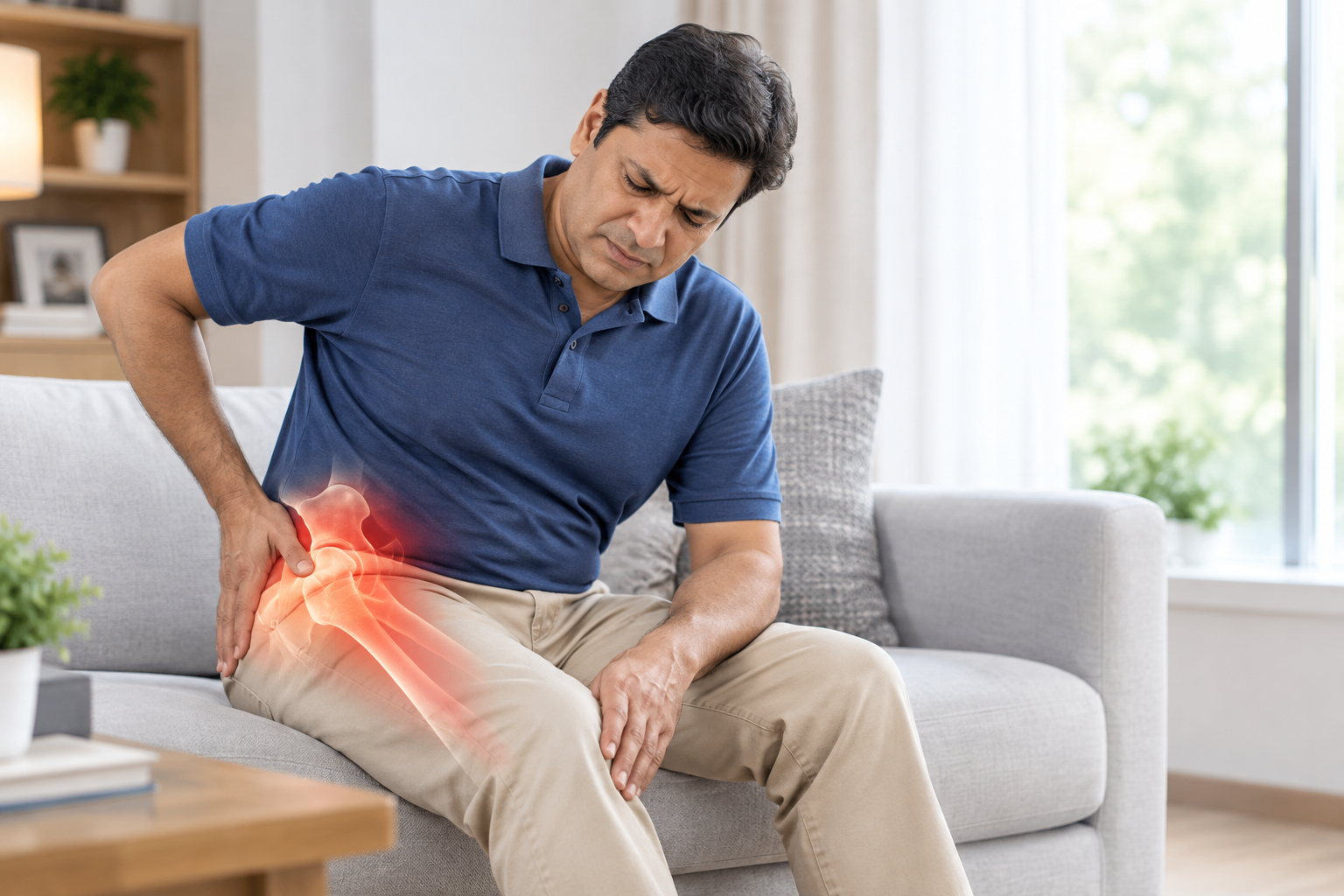
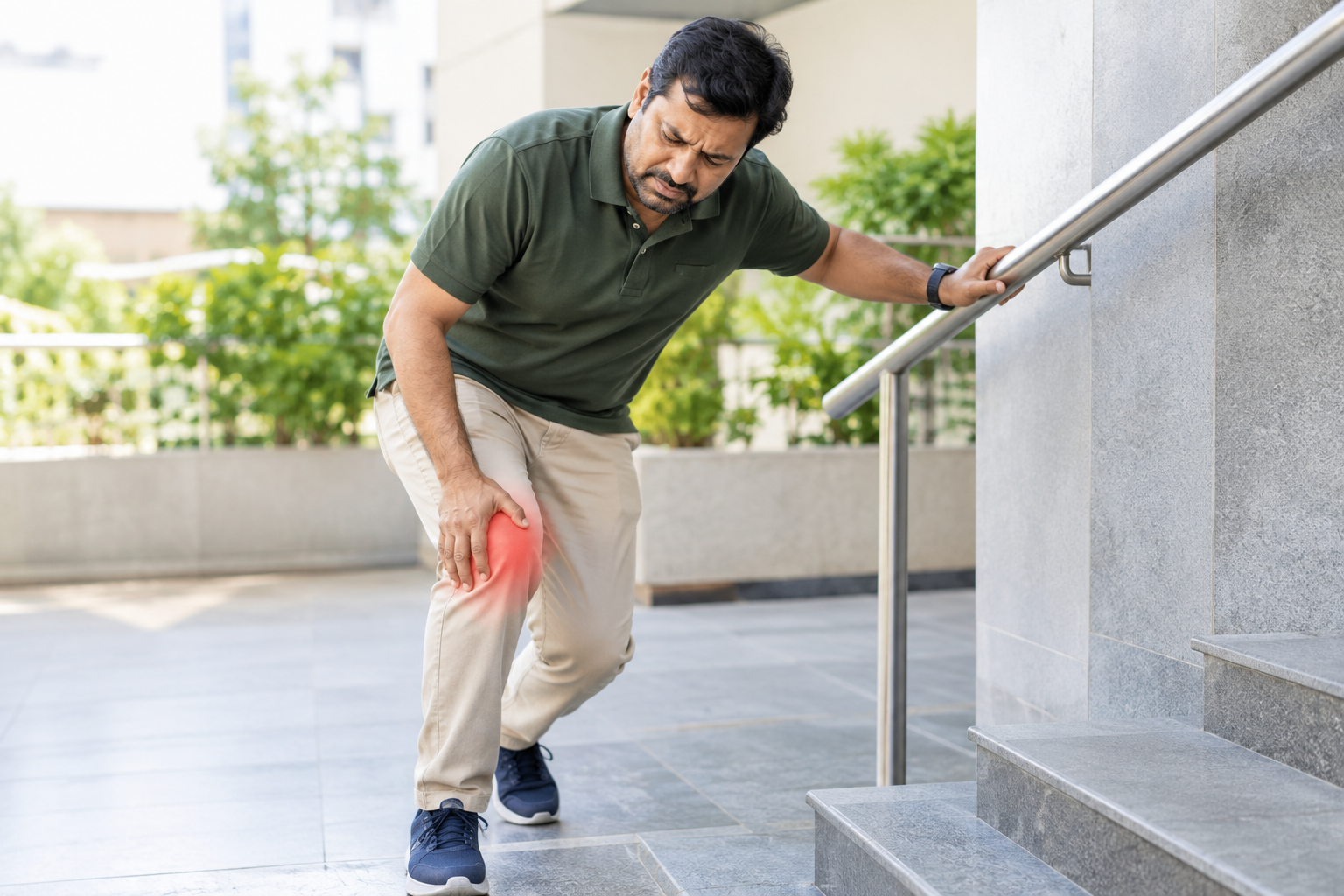
A knee that suddenly gives way or buckles can make walking, climbing stairs and standing feel unpredictable. Some people experience a brief sensation that the knee cannot support their weight, while others notice repeated episodes that affect their confidence and mobility. Knee buckling can have several causes, including ligament injuries, muscle weakness, pain-related changes in movement or problems within the joint. Identifying the underlying cause is important for choosing the right treatment.
What Does It Mean When Your Knee Gives Way?
Knee buckling describes a sudden feeling that the knee is collapsing, bending unexpectedly or failing to support the body during movement. It may occur while walking, changing direction, standing up or going downstairs.
True knee instability can occur when the structures that stabilise the joint are injured or weakened. However, a painful knee can also briefly give way because the muscles around it do not activate normally in response to pain. These experiences can feel similar but may require different treatment.
Repeated episodes should not be ignored, especially if they cause falls, swelling or difficulty bearing weight.
Common Causes of Knee Buckling
Ligament injuries: The anterior cruciate ligament (ACL), posterior cruciate ligament (PCL) and collateral ligaments help stabilise the knee. An injury may cause the knee to feel unstable, particularly during turning, pivoting or other demanding movements. Some ligament injuries occur with a popping sensation and swelling.
Quadriceps muscle weakness: The quadriceps muscles at the front of the thigh help control knee movement and support the body when standing, walking and using stairs. Weakness following an injury, surgery, prolonged inactivity or certain medical conditions can contribute to episodes of buckling.
Knee osteoarthritis: Changes in the joint associated with osteoarthritis can cause pain, stiffness and reduced muscle function. Some people experience a sense of instability, particularly during weight-bearing activities.
Meniscus injuries: The menisci are cartilage structures that help distribute loads within the knee. A tear may cause pain, swelling, catching or difficulty moving the joint normally. Symptoms vary depending on the location and severity of the injury.
Patellar instability: If the kneecap moves abnormally or partially slips out of its usual position, the knee may feel as though it is giving way. This may be associated with pain at the front of the knee and can sometimes follow a sudden twisting movement.
Pain-related muscle inhibition: Significant pain or swelling can interfere with normal muscle activation around the knee. This may cause a brief loss of control even when the ligaments are not completely torn.
Nerve or neurological problems: Conditions affecting the nerves or muscle control can occasionally contribute to leg weakness or knee buckling. Associated numbness, tingling or weakness in other areas may indicate the need for a broader medical assessment.
Symptoms That May Occur Alongside Knee Instability
Depending on the cause, knee buckling may occur with pain, swelling, stiffness, reduced movement, clicking, catching or difficulty changing direction. Some people notice instability only during physical activity, while others experience it during ordinary walking.
A ligament injury may follow a sudden twist, collision or awkward landing. A meniscus problem may produce joint-line pain or catching. Pain and stiffness that develop gradually may be associated with osteoarthritis or another underlying joint condition.
Seek urgent medical assessment if you cannot bear weight, have severe pain after an injury, notice a major deformity or develop rapid, substantial swelling. A hot, red knee with fever also requires urgent evaluation.
How Is Knee Instability Diagnosed?
An orthopaedic doctor will ask when the knee began giving way, how often it happens, whether it follows an injury and whether there is associated pain, swelling or locking. Information about falls and activities that trigger symptoms can help guide the assessment.
The physical examination may include checking knee movement, swelling, muscle strength, kneecap movement and ligament stability. The doctor may also assess walking and examine other parts of the leg when needed.
X-rays can help identify fractures, osteoarthritis and certain bone-related changes. MRI may be recommended when a ligament, meniscus or other soft-tissue injury is suspected and further imaging would help guide treatment. Imaging is selected according to the clinical findings rather than being necessary for every patient.
Treatment Options for a Knee That Gives Way
Treatment depends on the cause of the instability, the extent of any injury, your activity requirements and whether the knee is structurally unstable. A treatment plan should be based on a clinical assessment rather than the buckling symptom alone.
Activity modification: Temporarily avoid movements that repeatedly trigger buckling, such as sudden pivots or demanding sports. If walking feels unsafe, seek advice about suitable support to reduce the risk of falls.
Physiotherapy: A tailored programme may improve quadriceps and hip strength, balance, coordination and control of knee movement. Exercise selection should reflect the underlying diagnosis and the stage of recovery.
Medication and symptom management: A clinician may recommend appropriate pain-relief options when pain or inflammation contributes to the problem. Medication does not, by itself, correct a mechanically unstable ligament.
Knee braces: In selected cases, a brace may provide support during recovery or specific activities. Its usefulness depends on the condition, so it should be selected with professional guidance.
Surgery: Some ligament injuries, significant structural problems or recurrent kneecap instability may require surgical treatment. However, not every ligament injury or episode of buckling requires an operation. Decisions depend on the specific injury, functional limitations, activity goals and response to non-surgical treatment.
Can Knee Buckling Be Prevented?
Prevention depends on the underlying cause, but maintaining appropriate strength, balance and movement control can help support knee function. Increase exercise intensity gradually and use suitable technique during sports and strength training.
After a knee injury or operation, follow the recommended rehabilitation plan and return to demanding activities only when your clinician considers it appropriate. Do not continue an activity that repeatedly causes the knee to collapse or feel unstable.
If buckling has already occurred, addressing the cause early may help reduce the risk of falls and further injury.
When Should You See an Orthopaedic Doctor?
Arrange an assessment if your knee repeatedly gives way, affects your confidence when walking, causes falls or is accompanied by persistent pain, swelling or reduced movement. An evaluation is also advisable after a twisting injury followed by instability.
Seek urgent medical attention if the knee is deformed, you cannot bear weight, severe pain or swelling develops after an injury, or the joint becomes hot and red with fever.
An orthopaedic assessment can help distinguish ligament instability from pain-related buckling, muscle weakness and other causes, allowing treatment to be tailored to your needs.
Conclusion
Knee giving way or buckling is a symptom rather than a diagnosis. It may result from ligament injuries, muscle weakness, osteoarthritis, meniscus problems or other conditions affecting joint control.
Repeated instability deserves attention because it can interfere with everyday activities and increase the risk of falls. Identifying the cause is the first step towards appropriate treatment, rehabilitation and a safer return to normal movement.
Frequently asked questions
Knee buckling can result from ligament injuries, muscle weakness, pain-related changes in muscle activation, osteoarthritis or other joint problems. An assessment can help identify the cause, particularly if the episodes recur.
No. An ACL injury is one possible cause, but knee buckling can also occur with other ligament injuries, quadriceps weakness, meniscus problems, osteoarthritis or pain-related muscle inhibition.
Yes. Weakness in the quadriceps and other muscles that support the leg can affect knee control. Pain and swelling can also temporarily interfere with normal muscle activation. The appropriate exercises depend on the underlying cause.
Avoid activities that make the knee collapse or feel unsafe until you have received appropriate advice. If you cannot walk safely or bear weight, seek prompt medical assessment. A clinician can advise whether support, activity modification or rehabilitation is appropriate.
No. Some causes can be managed with physiotherapy, strengthening, activity modification and other non-surgical measures. Surgery may be considered for selected structural injuries or persistent instability depending on the diagnosis and functional needs.
Seek urgent medical attention if you cannot bear weight, the knee appears deformed, severe pain or substantial swelling develops after an injury, or you have a hot, red knee with fever.
Repeated buckling can increase the risk of falls and may expose the knee to additional injury. Assessment and appropriate management can help address the cause and improve safety during movement.
Originally published on dranilraheja.com.