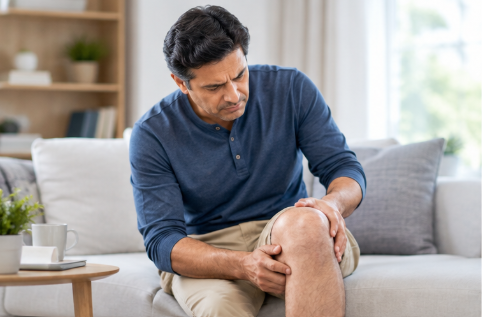
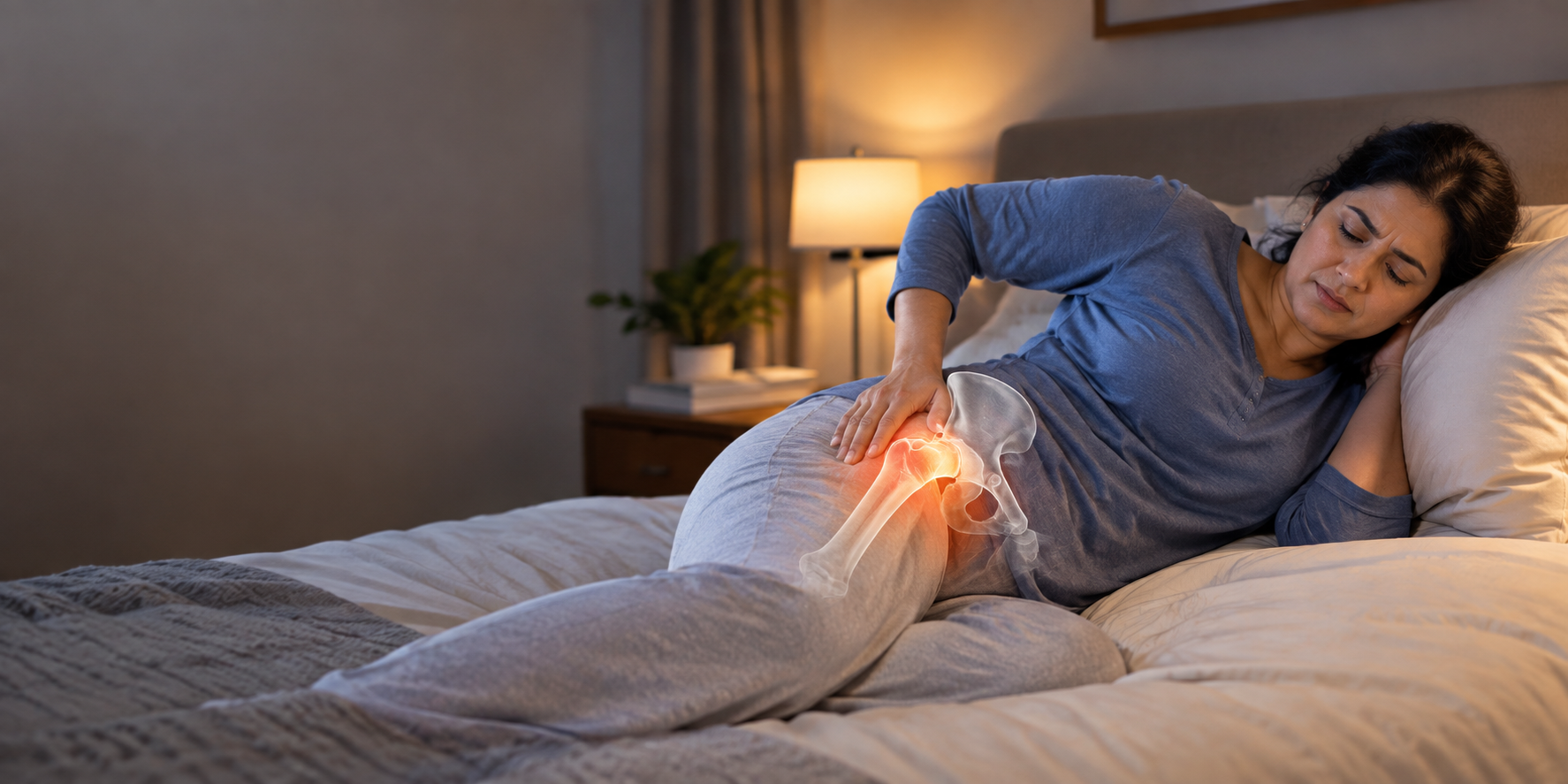
Hip pain that becomes worse at night can interfere with sleep and make it difficult to find a comfortable position. Some people experience pain deep in the groin or front of the hip, while others feel pain over the outer side of the hip when lying on that side. Osteoarthritis, bursitis, tendon-related problems, previous injury and other conditions can all cause hip pain. Understanding where the pain is located, what position triggers it and whether it is affecting movement can help determine when an orthopaedic assessment is appropriate.
Why Does My Hip Hurt More at Night?
Hip pain may become more noticeable at night because the position of the hip changes when you lie down. Sleeping directly on a painful side can place pressure on the tissues around the outer hip.
Pain from the hip joint itself may also continue while resting, particularly when an underlying condition such as osteoarthritis is causing ongoing joint irritation.
Nighttime can also make pain feel more noticeable because there are fewer activities and distractions. If hip pain repeatedly interrupts sleep, the underlying cause should be considered.
What Causes Hip Pain at Night?
Hip pain can come from the hip joint itself or from muscles, tendons and other soft tissues around the joint. The location of the pain can provide useful clues.
- Hip osteoarthritis
- Bursitis around the outer hip
- Tendon-related problems
- Previous hip injury
- Hip joint inflammation
- Reduced hip movement and stiffness
- Problems affecting the surrounding muscles and soft tissues
- Pain referred from another area, such as the lower back
Where Do You Feel Hip Pain?
The location of hip pain can sometimes provide clues about where the problem is coming from.
Pain deep in the groin or toward the front of the hip is more suggestive of a problem within the hip joint. Pain over the outer side of the hip or upper thigh may be related to the muscles, tendons or bursae around the joint.
Pain felt around the buttock or hip region can sometimes also be referred from the lower back. A proper assessment is therefore important when the source is unclear.
Can Hip Osteoarthritis Cause Pain at Night?
Yes. Hip osteoarthritis can cause pain and stiffness that may interfere with normal activities and, in some people, rest or sleep.
As the condition progresses, activities such as walking, climbing stairs, putting on shoes or getting in and out of a car may become more difficult.
Nighttime pain alone does not determine how advanced the arthritis is. The overall pattern of pain, stiffness, movement restriction and functional limitation needs to be considered.
Can Hip Bursitis Cause Pain While Sleeping?
Yes. Bursitis affecting the outer side of the hip can cause pain when lying directly on the affected side.
The pain may be felt over the outside of the hip and can sometimes extend down the outer part of the thigh. Activities such as prolonged walking, stair climbing or certain positions may also aggravate symptoms.
Changing sleeping position and avoiding direct pressure on the painful side may reduce discomfort, but persistent symptoms should be assessed.
Why Does My Hip Hurt When I Lie on My Side?
Lying directly on one side places pressure on the tissues around the outer part of the hip. If these tissues are irritated, the pressure can make symptoms more noticeable.
Outer hip pain that is particularly sensitive to lying on the affected side can occur with bursitis or tendon-related problems.
However, not every side-lying pain is caused by bursitis. The location and other symptoms help determine the cause.
Is Nighttime Hip Pain Always Caused by Arthritis?
No. Hip osteoarthritis is one possible cause, but nighttime pain can also come from bursitis, tendon problems, previous injury or other conditions involving the hip and surrounding tissues.
Pain from the lower back can also sometimes be felt around the hip, which is why identifying the exact source of pain is important before choosing treatment.
When Should Hip Pain at Night Be Checked?
If hip pain occasionally occurs after unusual activity and settles with rest, it may not require immediate assessment. However, repeated nighttime pain should not be ignored when it affects sleep or normal function.
An orthopaedic assessment is appropriate when symptoms persist, progressively worsen or are accompanied by significant stiffness or difficulty walking.
- Hip pain repeatedly wakes you at night
- Pain has continued for several weeks
- You are increasingly unable to sleep on the affected side
- Walking has become painful or difficult
- You have increasing hip stiffness
- You have difficulty putting on socks or shoes
- Getting in or out of a car has become difficult
- Pain is affecting everyday activities
- Symptoms are progressively worsening
When Is Nighttime Hip Pain an Urgent Concern?
Severe hip pain following a fall or significant injury requires prompt assessment, particularly if you cannot bear weight or the leg appears shortened or deformed.
A hot, swollen joint accompanied by fever or feeling unwell also requires prompt medical evaluation because infection and other serious conditions need to be considered.
Persistent unexplained pain that is progressively worsening or associated with other concerning symptoms should also be medically assessed rather than treated indefinitely with home measures.
How Is Hip Pain at Night Diagnosed?
Diagnosis begins with understanding where the pain is located, when it occurs and which activities or positions make it worse.
The hip may be examined for range of movement, stiffness, tenderness and other findings. The way you walk and the surrounding muscles may also be assessed.
X-rays are commonly useful when arthritis or other changes within the hip joint need to be evaluated. Additional imaging may be considered when the clinical findings suggest a problem involving soft tissues or another condition requiring further assessment.
- Discuss the location and duration of hip pain
- Identify whether pain occurs in the groin, outer hip, thigh or buttock
- Assess which sleeping positions and activities aggravate symptoms
- Examine hip movement and stiffness
- Assess walking pattern and surrounding structures when appropriate
- Use X-rays when joint or arthritis-related changes need assessment
- Consider additional imaging when specific findings require further evaluation
How Is Hip Pain at Night Treated?
Treatment depends on the cause of the pain. The goal is to address the underlying problem rather than simply suppress nighttime symptoms.
For some conditions, treatment may include activity modification, physiotherapy, exercises, appropriate pain-relief medication and other non-surgical measures.
When advanced hip osteoarthritis causes persistent pain and significant limitations despite appropriate non-surgical treatment, hip replacement may be considered after a detailed assessment.
- Activity modification
- Physiotherapy
- Appropriate hip mobility and strengthening exercises
- Pain-relief medication when medically appropriate
- Treatment directed at bursitis or tendon-related problems
- Management of hip osteoarthritis
- Injections or other procedures in selected cases
- Hip replacement surgery for selected patients with advanced joint disease
What Can You Do at Home for Hip Pain at Night?
Avoiding direct pressure on the painful side may help when symptoms are coming from the outer hip. Some people find it more comfortable to sleep on the opposite side or on their back.
A pillow can be used to support the legs or improve comfort depending on the sleeping position.
Reducing activities that clearly aggravate the pain and using appropriate cold or heat measures may provide temporary relief in some situations.
Home care should not replace medical assessment when nighttime pain persists or begins affecting walking, movement or daily activities.
Does Hip Pain at Night Mean I Need a Hip Replacement?
No. Nighttime hip pain alone does not mean that hip replacement is required.
Hip replacement may be considered when advanced joint damage, commonly from osteoarthritis, causes persistent pain and significant limitations despite appropriate non-surgical treatment.
The decision depends on the condition of the hip joint, severity of symptoms, functional limitations and response to other treatments.
The Bottom Line
Hip pain at night can come from osteoarthritis, bursitis, tendon-related problems, previous injury or other conditions involving the hip or surrounding tissues. The location and pattern of pain are important when determining the likely source.
If hip pain repeatedly disturbs your sleep, affects walking or continues despite appropriate self-care, an orthopaedic assessment can help identify the cause and guide treatment. When advanced hip joint disease is responsible, treatment options can be discussed based on the individual's symptoms and functional needs.
Frequently asked questions
Hip pain may become more noticeable at night because of sleeping position, pressure on the affected side or pain from the hip joint itself. Osteoarthritis, bursitis, tendon problems and previous injuries can all cause nighttime hip pain.
Lying on the affected side can put pressure on the tissues around the outer hip. Bursitis and tendon-related problems can cause pain in this position, although other causes are also possible.
Yes. Hip osteoarthritis can cause pain and stiffness that may continue during rest and interfere with sleep, particularly as the condition becomes more symptomatic.
Avoiding direct pressure on the painful side may help. Some people find sleeping on the opposite side or on their back more comfortable. A pillow can also be used to support the legs depending on the sleeping position.
Consider an assessment when hip pain repeatedly interrupts sleep, persists for several weeks, progressively worsens or begins affecting walking and daily activities. Prompt assessment is needed after significant injury or when severe symptoms occur.
No. Nighttime pain alone does not mean that hip replacement is required. Replacement may be considered when advanced hip joint damage causes persistent pain and significant functional limitations despite appropriate non-surgical treatment.
Originally published on dranilraheja.com.