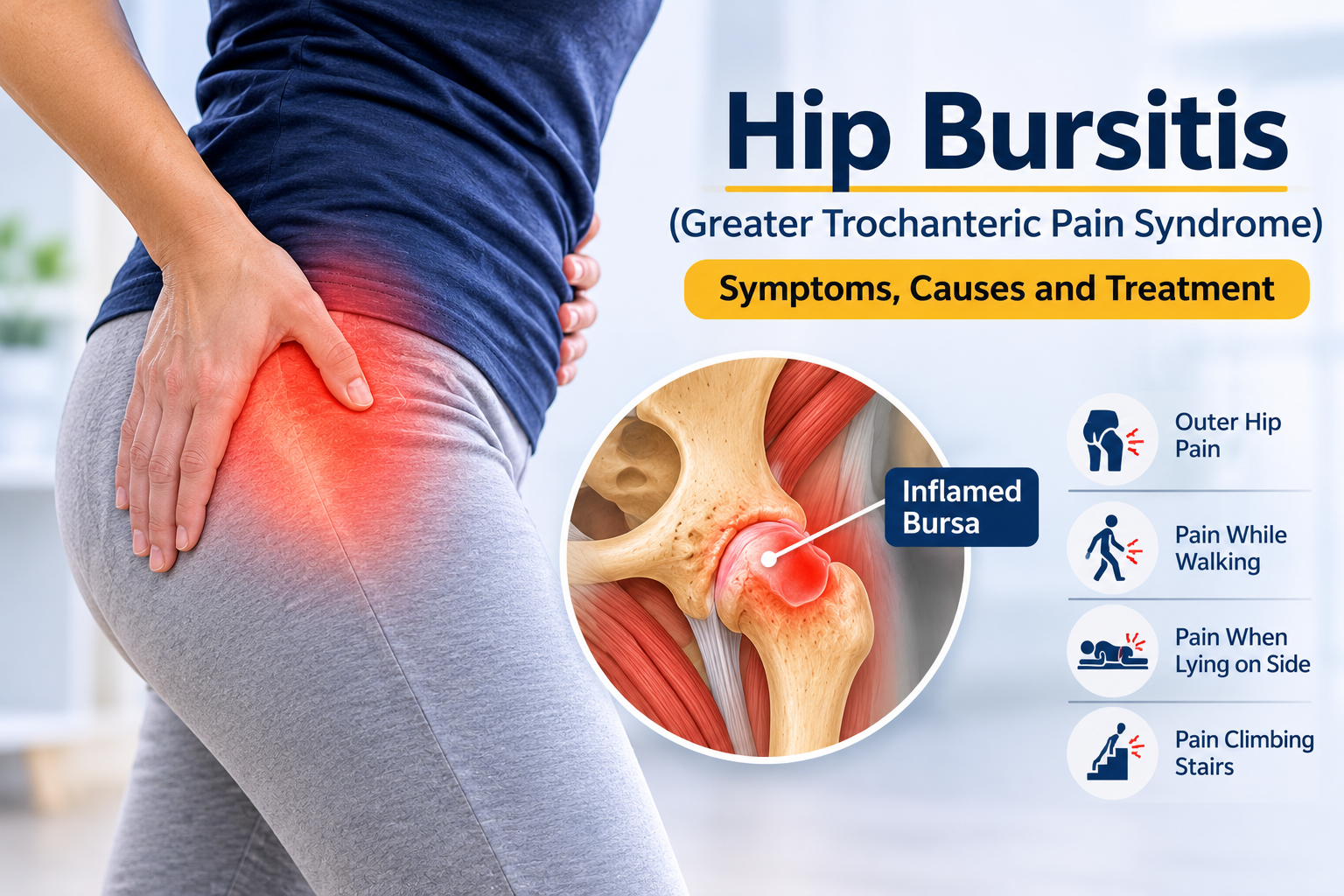
Pain over the outer side of the hip is sometimes called hip bursitis or trochanteric bursitis. In many people, the broader term greater trochanteric pain syndrome (GTPS) is more accurate because symptoms may involve the gluteal tendons as well as the bursa. The condition can make it uncomfortable to lie on the affected side, walk for long periods or climb stairs. Most cases are managed without surgery, using activity adjustments and progressive strengthening.
What Is Hip Bursitis or Greater Trochanteric Pain Syndrome?
The greater trochanter is the bony prominence on the outer side of the upper thighbone. Gluteal muscles and their tendons attach around this area, while small fluid-filled sacs called bursae help reduce friction as tissues move.
Greater trochanteric pain syndrome (GTPS) describes pain arising from soft tissues around the greater trochanter. It may involve irritation of a bursa, gluteal tendinopathy or both. For this reason, GTPS is often a more accurate term than bursitis alone.
Causes and Risk Factors
GTPS can develop when tissues around the outer hip are exposed to more load or compression than they can comfortably tolerate. This may follow a sudden increase in walking, running or exercise, prolonged standing, a fall or changes in muscle strength and movement patterns.
The condition may also occur alongside problems in the lower back, hip joint or lower limb. These can produce similar symptoms, so assessment is important before assuming all outer hip pain is bursitis.
- A sudden increase in walking, running or other physical activity
- Repeated stair climbing, squatting or prolonged standing
- Direct impact or a fall onto the side of the hip
- Reduced strength or altered loading of the hip muscles
- Positions that repeatedly compress the outer hip, such as lying on the painful side or crossing the legs
- Coexisting back, hip, knee or foot problems affecting movement
Symptoms of Greater Trochanteric Pain Syndrome
The main symptom is pain or tenderness over the outer hip, around the bony prominence at the top of the thigh. Pain may spread down the outer thigh or into the buttock. It can be intermittent or persistent and may become more noticeable during particular activities.
- Pain or tenderness on the outer side of the hip
- Discomfort when lying on the affected side
- Pain while climbing stairs, walking uphill or standing on one leg
- Discomfort after prolonged walking or standing
- Pain when getting up from a low chair or crossing the legs
- Sleep disturbance because pressure on the affected side is uncomfortable
When Should You See a Doctor?
Arrange a medical assessment if outer hip pain persists, affects sleep or limits walking and daily activities, or if symptoms worsen despite modifying aggravating activities.
Seek urgent assessment after a significant fall or injury, especially if you cannot bear weight, have severe pain or notice a deformity. Fever, redness or marked warmth around the hip also needs prompt medical attention.
How Is Hip Bursitis Diagnosed?
Diagnosis usually begins with the symptom history and a physical examination. The doctor may check for tenderness over the greater trochanter, assess hip movement and strength, and observe activities such as standing on one leg or walking. The lower back and hip joint may also be assessed because they can cause similar pain.
Imaging is not required in every case. X-rays may be used to look for arthritis or bone-related causes. Ultrasound or MRI may be considered when the diagnosis is uncertain, symptoms persist or a gluteal tendon injury or another condition needs closer assessment.
Non-Surgical Treatment and Activity Modification
Most people with GTPS begin with non-surgical treatment. The aim is to reduce excessive irritation while keeping the hip moving and gradually improving the strength and capacity of surrounding muscles and tendons.
Temporarily reduce activities that clearly aggravate symptoms, but avoid prolonged inactivity. If side-sleeping is painful, try sleeping on your back with a pillow under the knees or on the opposite side with a pillow between the knees. Avoid repeatedly crossing the legs or standing with body weight shifted onto one hip.
- Modify painful activities for a period rather than stopping all movement
- Avoid lying directly on the painful hip
- Use a pillow between the knees when sleeping on the opposite side
- Avoid prolonged leg crossing and leaning onto one hip
- Maintain comfortable daily movement
- Discuss suitable pain relief with a doctor or pharmacist, considering other conditions and medicines
Physiotherapy and Strengthening Exercises
Progressive exercise is a key part of GTPS management. A physiotherapist may prescribe exercises to strengthen the gluteal muscles and improve control of the hip and pelvis. The programme should begin at a tolerable level and progress gradually according to symptoms and function.
Some discomfort can occur when starting strengthening exercises, but activity should not cause a sustained worsening of symptoms. If pain becomes significantly worse or new symptoms appear, the programme should be reviewed by the treating professional.
Are Injections Needed for Hip Bursitis?
A corticosteroid injection around the outer hip may be considered in selected cases when pain remains difficult to manage. It may provide short-term relief and help a person participate in rehabilitation, but it does not necessarily correct the underlying tendon or loading problem. Potential benefits, limitations and risks should be discussed before proceeding.
When Is Surgery Considered?
Surgery is uncommon for GTPS. It may be considered only in selected people with persistent symptoms despite an adequate course of non-surgical treatment, particularly when investigations identify a significant gluteal tendon tear or another structural problem that may benefit from repair.
The specific procedure depends on the underlying diagnosis. A surgeon should explain which structure is being treated, why surgery is being considered, the expected rehabilitation and possible risks. Most people do not need an operation.
Recovery and Long-Term Outlook
Recovery can take time, particularly when the gluteal tendons are involved. Symptoms often improve gradually with appropriate load management and progressive strengthening, but the timeline varies according to the cause, duration of symptoms and consistency of rehabilitation. Temporary flare-ups may occur when activity increases too quickly.
A gradual return to walking, work and exercise is generally preferable to suddenly resuming all previous activity. Follow-up may be useful if progress stalls or symptoms change.
Can Greater Trochanteric Pain Syndrome Be Prevented?
Although not every case can be prevented, sensible training progression and balanced hip strength may help reduce repeated overload. Pay attention to early symptoms and adjust activities before pain becomes persistent.
- Increase walking, running and exercise volume gradually
- Build hip and gluteal strength with an appropriate programme
- Avoid repeatedly standing with most body weight on one leg
- Limit prolonged positions that compress the painful outer hip
- Vary activities when increasing exercise
Why Accurate Assessment Matters
Outer hip pain can arise from the bursa, gluteal tendons, hip joint, lower back or other nearby structures. An accurate diagnosis helps guide the right rehabilitation plan and avoids treating every case as simple bursitis. An orthopaedic specialist can assess the likely source of pain and explain appropriate options.
Frequently asked questions
They are closely related terms, but they are not always identical. Hip bursitis refers to irritation of a bursa. Greater trochanteric pain syndrome is a broader term for outer hip pain that may involve the bursa, gluteal tendons or both.
It commonly causes pain or tenderness over the outer side of the hip. Pain may spread down the outer thigh and can become worse when lying on the affected side, climbing stairs, walking or standing for long periods.
Many people can remain active, but the amount and type of activity may need to be adjusted. Reduce activities that cause a clear flare-up and build back gradually with guidance from a healthcare professional.
Most cases improve with non-surgical care, particularly activity modification and progressive physiotherapy. Surgery is uncommon and is considered only for selected cases with persistent symptoms or a structural problem such as a significant gluteal tendon tear.
Yes. A tailored programme that gradually strengthens the gluteal muscles and improves hip control is a central part of treatment. Exercises should be progressed according to symptoms and should not cause a sustained worsening of pain.
The recovery period varies. Some people improve over weeks, while symptoms involving the gluteal tendons may take several months of consistent load management and rehabilitation. Persistent or worsening symptoms should be reassessed.
Avoid lying directly on the painful side. You may find it more comfortable to sleep on your back with a pillow under your knees, or on the opposite side with a pillow between your knees to keep the hips aligned.
Originally published on dranilraheja.com.