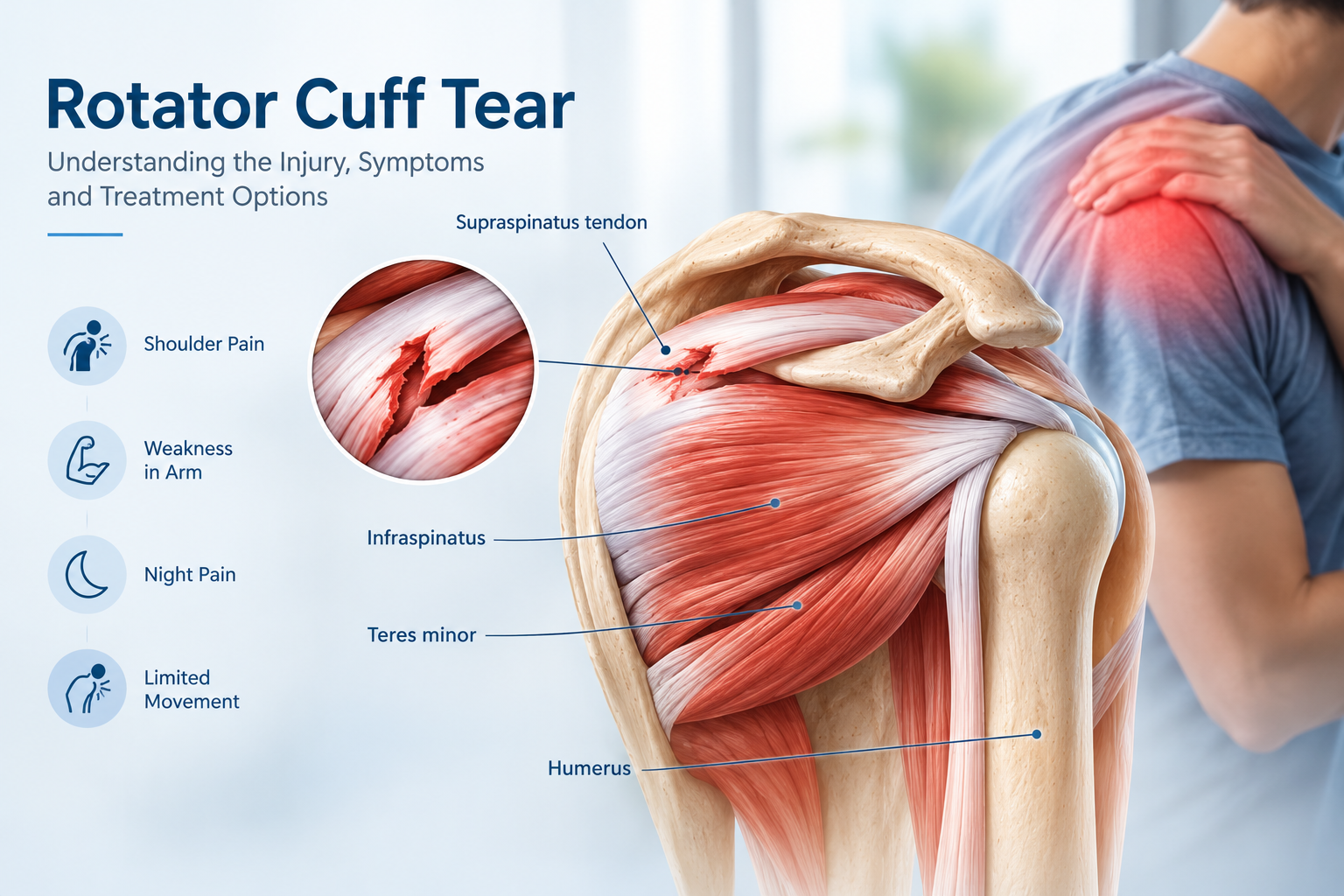
The rotator cuff is a group of four muscles and their tendons that help keep the shoulder joint stable and allow the arm to lift and rotate. A tear occurs when one or more of these tendons becomes partially or completely damaged. It can happen after a fall or sudden injury, or develop gradually as tendons wear over time. Common symptoms include shoulder pain, weakness and difficulty performing overhead movements. Treatment depends on the tear's size, cause, symptoms, activity demands and overall health.
What Is a Rotator Cuff Tear?
The shoulder is a ball-and-socket joint that allows a wide range of arm movements. The rotator cuff consists of four muscles and their tendons that help control this movement and keep the upper arm bone centred in the shoulder socket.
A rotator cuff tear occurs when a tendon is damaged or separates partly or completely from its attachment. A partial tear damages some of the tendon fibres, while a full-thickness tear extends through the tendon. Some tears develop slowly, while others follow a specific injury.
A tear does not always cause pain. However, it can contribute to weakness, reduced movement and difficulty with daily tasks, depending on its size and the structures involved.
Common Symptoms of a Rotator Cuff Tear
Shoulder pain is a common symptom, especially when lifting or lowering the arm, reaching overhead or moving the hand behind the back. Pain may also be noticeable at night or when lying on the affected shoulder.
Weakness when lifting or rotating the arm can make everyday activities difficult, including dressing, combing the hair, reaching for objects on a shelf or carrying items. Some people experience clicking or a crackling sensation during movement.
A tear following a fall or sudden force may cause immediate pain and weakness. Tears that develop gradually may begin with mild discomfort and become more troublesome over time.
Shoulder pain can also result from other conditions, including frozen shoulder, arthritis, tendon inflammation or neck problems. Symptoms alone cannot confirm a rotator cuff tear.
What Causes a Rotator Cuff Tear?
Acute tears can occur after falling onto an outstretched arm, sustaining a shoulder injury or lifting a heavy object with a sudden jerking movement. Such injuries may occur alongside a fracture, dislocation or other shoulder damage.
Degenerative tears develop gradually as tendon tissue changes over time. Repetitive overhead activity, certain sports and physically demanding work can place repeated stress on the shoulder. Age-related changes can also increase the likelihood of tendon damage.
Not every person with a rotator cuff tear can identify one specific cause. A clinician will consider the history of the symptoms, the type of activity involved and the examination findings.
How Is a Rotator Cuff Tear Diagnosed?
Assessment usually starts with a medical history and physical examination. The orthopaedic specialist may check shoulder tenderness, range of motion, arm strength and how different movements affect the pain. The neck and surrounding structures may also be assessed to look for other sources of symptoms.
X-rays can help identify bone abnormalities, arthritis or other problems, but they do not directly show rotator cuff tendons. Ultrasound or MRI may be recommended to evaluate the tendons and determine the location and extent of a suspected tear.
The choice of imaging depends on the clinical findings and whether the result will help guide treatment. A scan should be interpreted alongside the examination because tendon changes can sometimes be present without causing symptoms.
Non-Surgical Treatment for Rotator Cuff Tears
Many people can improve their shoulder pain and function without surgery. Depending on the injury, initial management may include temporarily reducing painful overhead activities and following a structured rehabilitation plan.
Physiotherapy can help restore comfortable movement, improve flexibility and strengthen the muscles that support the shoulder. Exercises should be selected and progressed by a qualified professional according to the severity of the injury and the person's symptoms.
A clinician may recommend suitable pain-relief medication after considering the patient's medical history and potential side effects. In selected cases, an injection may be considered to help manage pain and facilitate rehabilitation. The benefits and limitations should be discussed before proceeding.
Non-surgical treatment can improve function even when a structural tear remains. However, a tendon tear may persist or enlarge in some cases, so worsening pain or weakness should be reassessed.
When Is Rotator Cuff Surgery Recommended?
Surgery may be considered when significant pain or weakness persists despite an appropriate course of non-surgical treatment, or when the tear is likely to benefit from early repair. The decision depends on whether the injury is acute or degenerative, the size and pattern of the tear, tissue quality, activity demands and general health.
A recent traumatic tear associated with substantial weakness may require timely specialist assessment. Surgery may also be discussed for selected active patients who need reliable shoulder strength for work or sports.
Rotator cuff repair usually involves reattaching the damaged tendon to the upper arm bone. Many repairs are performed arthroscopically using small incisions and a camera, although the appropriate approach depends on the injury and the surgeon's assessment.
Surgery carries risks, including infection, stiffness, anaesthesia-related complications and failure or re-tearing of the repair. It is not necessary for every rotator cuff tear, and the expected benefits should be weighed against the risks and rehabilitation requirements.
Recovery and Rehabilitation After Treatment
Recovery varies according to the size of the tear, the treatment provided and the person's overall health. People receiving non-surgical care may gradually regain movement and strength through a guided exercise programme.
After surgical repair, a sling may be required for a period to protect the tendon while it heals. Rehabilitation generally progresses in stages, beginning with protected movement and advancing to strengthening when the surgeon and physiotherapist consider it appropriate.
Returning to lifting, overhead work or sports too early can place excessive stress on the healing tendon. Follow the rehabilitation instructions and attend recommended follow-up appointments. Recovery after surgical repair often takes several months, and full recovery can take longer depending on the injury.
Can You Prevent a Rotator Cuff Injury?
Not all rotator cuff tears can be prevented, particularly those related to age-related tendon changes. However, gradual increases in exercise intensity, appropriate warm-ups and shoulder-strengthening exercises may support shoulder function.
Use correct lifting techniques and avoid sudden increases in repetitive overhead activity when possible. If your shoulder becomes painful during exercise or work, modify the activity and seek advice if symptoms persist rather than repeatedly working through the pain.
When Should You See an Orthopaedic Doctor?
Arrange an orthopaedic assessment if shoulder pain persists, regularly interrupts sleep, causes weakness or limits everyday movements. Early assessment can help identify the source of the problem and determine whether rehabilitation, imaging or other treatment is appropriate.
Seek prompt medical attention following a significant injury if you develop sudden severe pain, marked weakness, inability to raise the arm or an obvious change in shoulder shape. These symptoms can indicate a serious injury that needs timely evaluation.
Frequently asked questions
Many people experience improved pain and function with activity modification and physiotherapy. However, a tendon tear may remain structurally present, and some tears can enlarge over time. The appropriate approach depends on the tear and the patient's symptoms and needs.
Early symptoms may include pain when lifting the arm, discomfort at night, weakness during shoulder rotation and difficulty reaching overhead. Some tears cause few symptoms, so a clinical examination may be needed to establish the cause.
No. Diagnosis begins with the medical history and physical examination. An MRI or ultrasound may be recommended when imaging is needed to confirm the diagnosis, assess the tear or plan treatment.
Recovery often takes several months and varies according to the tear, the repair and the rehabilitation plan. Tendon healing and return to overhead activities take time, so follow the surgeon's and physiotherapist's guidance.
Yes. A tailored physiotherapy programme can improve movement, strengthen supporting muscles and reduce symptoms in many patients. Exercises should be adjusted to the injury, and persistent or worsening weakness should be reassessed.
Surgery may be considered for selected acute traumatic tears, significant weakness, tears that are suitable for repair or symptoms that persist despite appropriate non-surgical treatment. An orthopaedic specialist can explain the likely benefits, risks and alternatives.
Night pain can occur with a rotator cuff tear, particularly when lying on the affected shoulder, but it can also result from other conditions. Persistent night pain or associated weakness warrants medical assessment.
Originally published on dranilraheja.com.