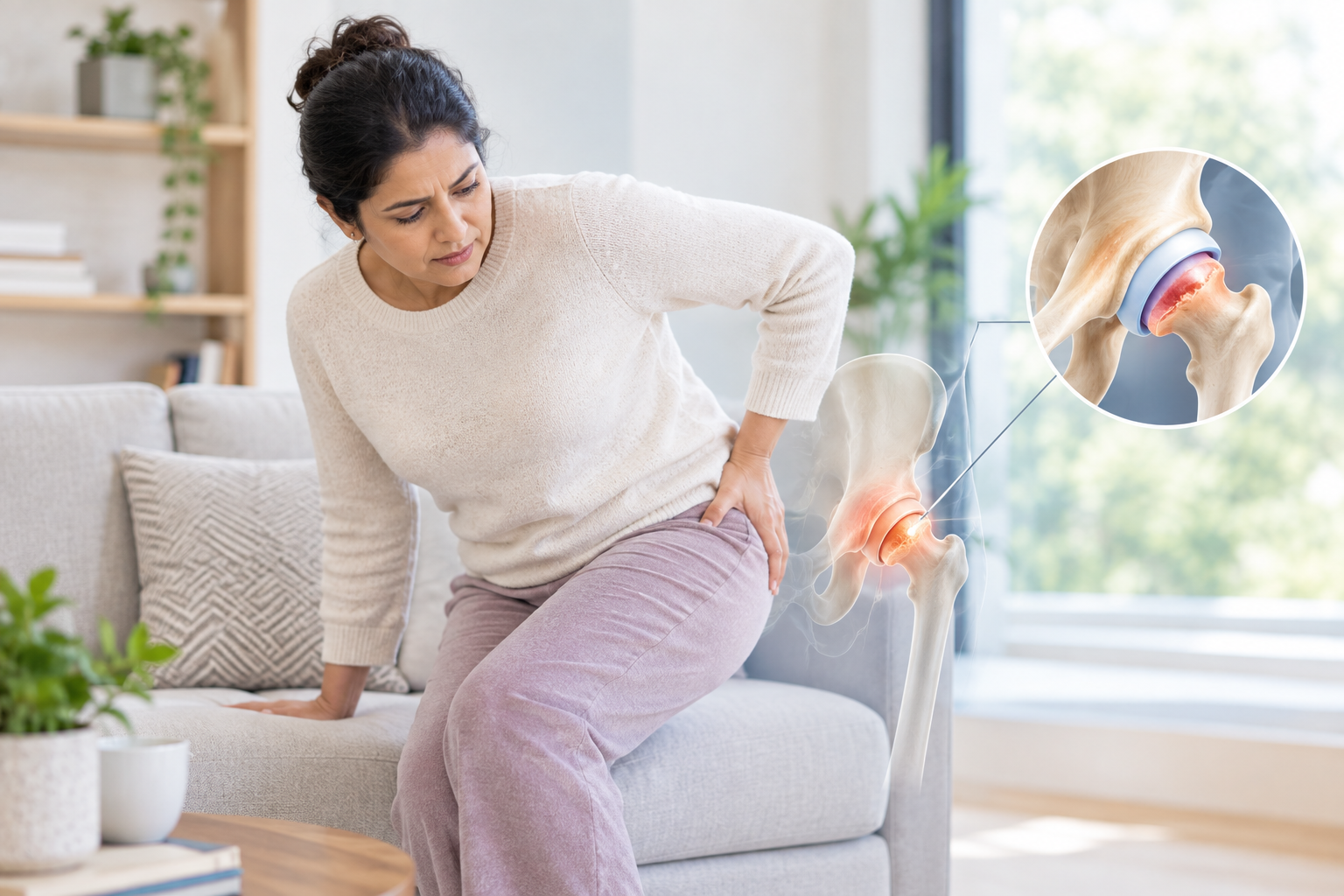
Hip stiffness can develop gradually and may initially seem like a minor problem. You may notice difficulty putting on socks, getting into a car, crossing your legs or standing up after sitting for a long time. In many people, hip stiffness is related to osteoarthritis, but previous injury, reduced activity, inflammation and other hip conditions can also affect movement. The pattern of symptoms and how they affect daily activities are important when deciding whether an assessment is needed.
What does hip stiffness mean?
Hip stiffness means that the hip does not move as freely as it normally does. You may notice reduced movement when bending, rotating or bringing the leg towards the body.
Some people mainly notice stiffness after waking up or after sitting for a long period. Others experience persistent restriction that gradually affects walking, stairs, dressing and other everyday movements.
Stiffness itself is a symptom rather than a diagnosis. The underlying cause needs to be considered, particularly when stiffness is persistent or progressively worsening.
What causes hip stiffness?
Hip stiffness can have several causes. Osteoarthritis is an important cause, particularly when stiffness occurs together with groin pain and reduced movement. Other conditions can produce similar symptoms, so the complete clinical picture matters.
- Hip osteoarthritis
- Previous hip injury or surgery
- Reduced physical activity and prolonged periods of inactivity
- Inflammatory joint conditions such as rheumatoid arthritis
- Certain structural problems affecting the shape or movement of the hip
- Muscle weakness or reduced mobility around the hip
- Other conditions affecting the hip joint or surrounding tissues
Is hip stiffness a sign of arthritis?
It can be. Osteoarthritis of the hip commonly causes pain and stiffness, with symptoms often becoming more noticeable after periods of inactivity or during weight-bearing activities such as walking.
Hip osteoarthritis may cause pain in the groin, outer hip or buttock, and discomfort can sometimes extend towards the thigh or knee. Reduced hip movement can also make everyday tasks such as putting on shoes and socks more difficult.
However, stiffness alone does not prove that you have arthritis. An assessment is useful when symptoms persist, particularly if pain, reduced mobility or functional difficulties are developing alongside the stiffness.
Why is my hip stiff in the morning?
Some people with hip osteoarthritis notice stiffness when they first get up or after sitting or resting for a period of time. The joint may feel less mobile initially and become easier to move once activity begins.
Morning stiffness can occur with different joint conditions, however. The duration and pattern of stiffness are therefore relevant. Prolonged morning stiffness, particularly when associated with multiple painful or swollen joints, may require evaluation for an inflammatory joint condition rather than being assumed to be osteoarthritis.
What everyday activities can become difficult with hip stiffness?
As hip movement becomes restricted, activities that require bending or rotation of the hip may become increasingly uncomfortable.
You may notice that movements which were previously automatic now require more effort or that you need to change the way you perform certain tasks.
- Putting on socks or shoes
- Getting in and out of a car
- Getting up from a low chair
- Crossing your legs
- Bending down
- Climbing stairs
- Walking longer distances
- Squatting or other activities requiring deeper hip movement
When should hip stiffness be checked by a doctor?
Occasional stiffness after prolonged sitting may not require immediate specialist treatment. However, persistent or progressively worsening stiffness deserves attention, especially when it starts affecting walking, sleep, work or everyday activities.
An assessment is also appropriate when stiffness is associated with significant pain, reduced range of movement, a limp or symptoms that continue despite reasonable activity and self-care measures.
- Hip stiffness is persistent or progressively worsening
- You have increasing groin, hip or thigh pain
- Walking or climbing stairs is becoming difficult
- You have difficulty putting on shoes or socks
- Getting into or out of a car has become difficult
- You are developing a limp or significant reduction in mobility
- Hip symptoms are affecting sleep or daily activities
- Stiffness occurs together with swelling, fever or severe pain
How is the cause of hip stiffness diagnosed?
A consultation usually begins with questions about where you feel the symptoms, when the stiffness occurs, how long it lasts and which activities have become difficult.
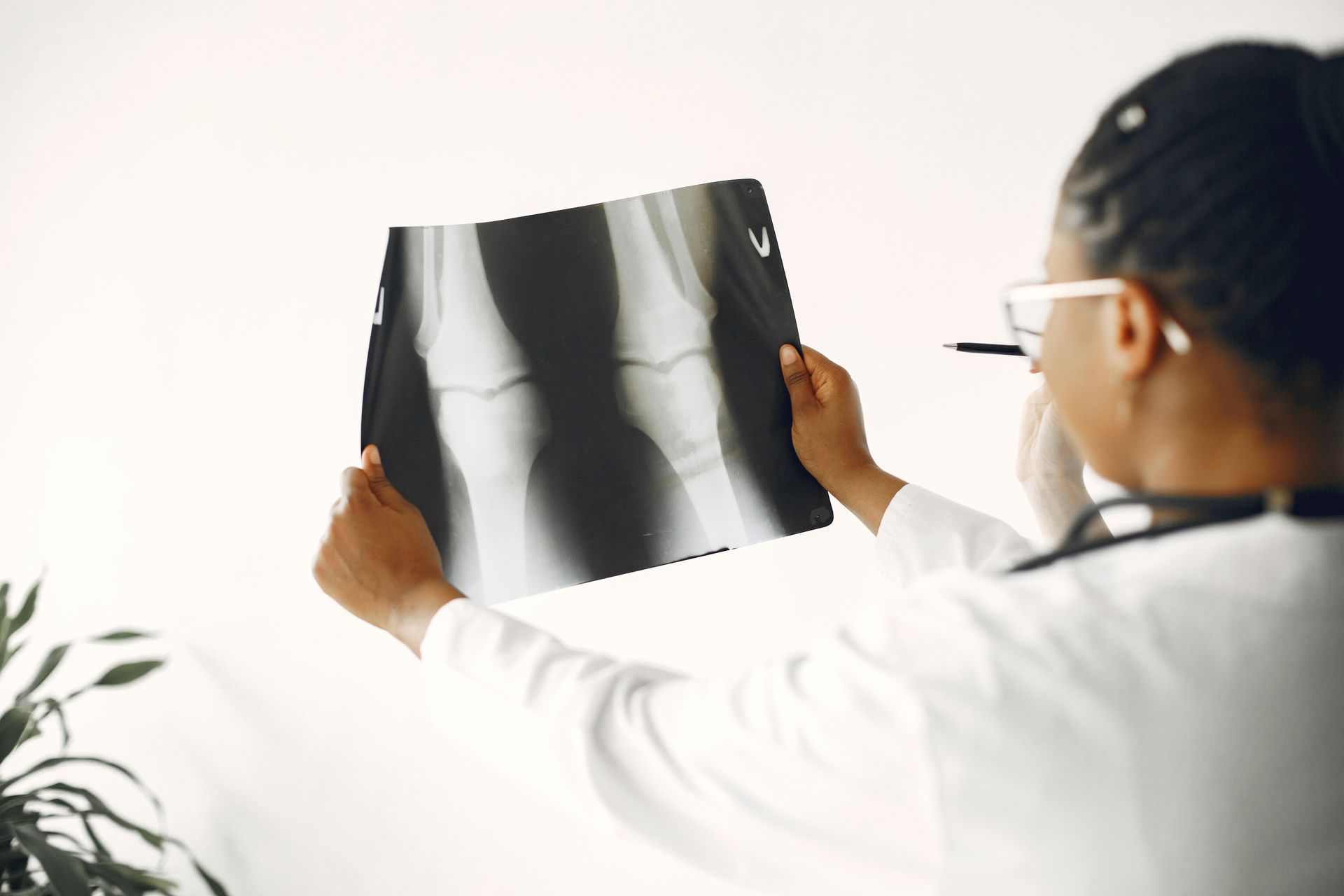
The hip is examined to assess range of movement, pain during movement, walking pattern and other clinical findings. Depending on the symptoms, an X-ray may be used to assess the structure of the hip and look for changes associated with osteoarthritis or other conditions.
Not every person with hip stiffness needs an MRI or other advanced scan. The need for imaging depends on the history, examination and suspected cause.
- Discuss the pattern and duration of stiffness
- Identify associated pain and functional limitations
- Assess hip movement and walking pattern
- Review previous injuries or treatments
- Consider X-rays when clinically appropriate
- Consider additional investigations when the symptoms suggest another underlying problem
- Develop a treatment plan based on the underlying cause
How is hip stiffness treated?
Treatment depends on why the hip has become stiff and how much it is affecting your function. For many people with hip osteoarthritis, treatment initially focuses on maintaining movement, improving strength and managing symptoms.
Depending on the individual situation, treatment may include appropriate exercise and physiotherapy, activity modification, weight management when appropriate and medication for pain control.
The aim is to maintain mobility and function while controlling symptoms. If stiffness and pain continue to progress despite appropriate non-surgical treatment, an orthopaedic consultation can help determine what other options should be considered.
Can exercise help hip stiffness?
Appropriate physical activity can help maintain hip movement and strengthen the muscles around the joint. The type and intensity of exercise should be adjusted to the individual's symptoms and physical condition.
For people with hip osteoarthritis, low-impact activities such as walking, cycling or swimming may be easier to tolerate than high-impact activities. A physiotherapist can also help develop an exercise programme suited to your level of mobility.
Exercise should not be used to ignore severe or progressively worsening symptoms. Persistent pain and significant loss of movement should be assessed rather than repeatedly pushed through.
Does hip stiffness mean you need a hip replacement?
No. Hip stiffness alone does not mean that hip replacement is required.
Hip replacement becomes a consideration when significant joint damage is associated with persistent pain and functional limitation, particularly when appropriate non-surgical treatments are no longer providing adequate relief.
If stiffness is your main symptom, an assessment can help identify the cause and determine whether exercise, physiotherapy, medication, activity modification or another treatment is more appropriate.
When is hip stiffness more concerning?
Hip stiffness should be assessed promptly when it develops suddenly after a significant injury, particularly if you cannot bear weight or have severe pain.
A hot or swollen joint accompanied by fever or feeling unwell also requires prompt medical attention because infection is one possible cause of an acutely painful joint.
Persistent stiffness with progressive loss of movement, significant pain or difficulty performing normal activities should also be evaluated rather than ignored.
The bottom line
Hip stiffness can result from osteoarthritis, previous injury, reduced mobility and several other conditions. Stiffness after rest is common in hip osteoarthritis, but the symptom pattern alone cannot establish the diagnosis.
If hip stiffness is persistent, worsening or beginning to affect walking, dressing, stairs, driving or other daily activities, an orthopaedic assessment can help identify the cause and guide appropriate treatment.
Frequently asked questions
Common causes include hip osteoarthritis, previous injury, reduced mobility and certain inflammatory or structural conditions affecting the hip. The cause cannot be determined from stiffness alone and may require an examination.
Hip stiffness can be a symptom of osteoarthritis, particularly when it occurs with groin pain and reduced hip movement. However, other conditions can also cause stiffness, so persistent symptoms should be assessed.
Hip stiffness can become more noticeable after prolonged periods of inactivity. This is common in people with osteoarthritis, although other conditions can also cause stiffness after rest.
Appropriate exercise can help maintain mobility and strengthen the muscles around the hip. The type and intensity should be suited to your symptoms and physical condition, particularly if you have significant pain.
No. Hip stiffness alone does not mean that you need a hip replacement. Surgery may be considered when significant joint damage causes persistent pain and functional limitations despite appropriate non-surgical treatment.
Originally published on dranilraheja.com.