The knee joint depends on smooth cartilage surfaces to move comfortably and efficiently. When this cartilage becomes damaged, movement may become painful, swelling can develop and everyday activities such as walking, climbing stairs or exercising may become difficult. Knee cartilage damage can occur after an injury, repetitive stress or changes associated with joint degeneration. The severity varies considerably, and not every cartilage defect requires surgery. Understanding the type and extent of damage is important for choosing the right treatment and protecting long-term knee function.
What Is Knee Cartilage Damage?
Articular cartilage is a smooth, specialised tissue covering the ends of bones inside the knee joint. It allows the femur, tibia and patella to move against one another with minimal friction while helping distribute forces across the joint.
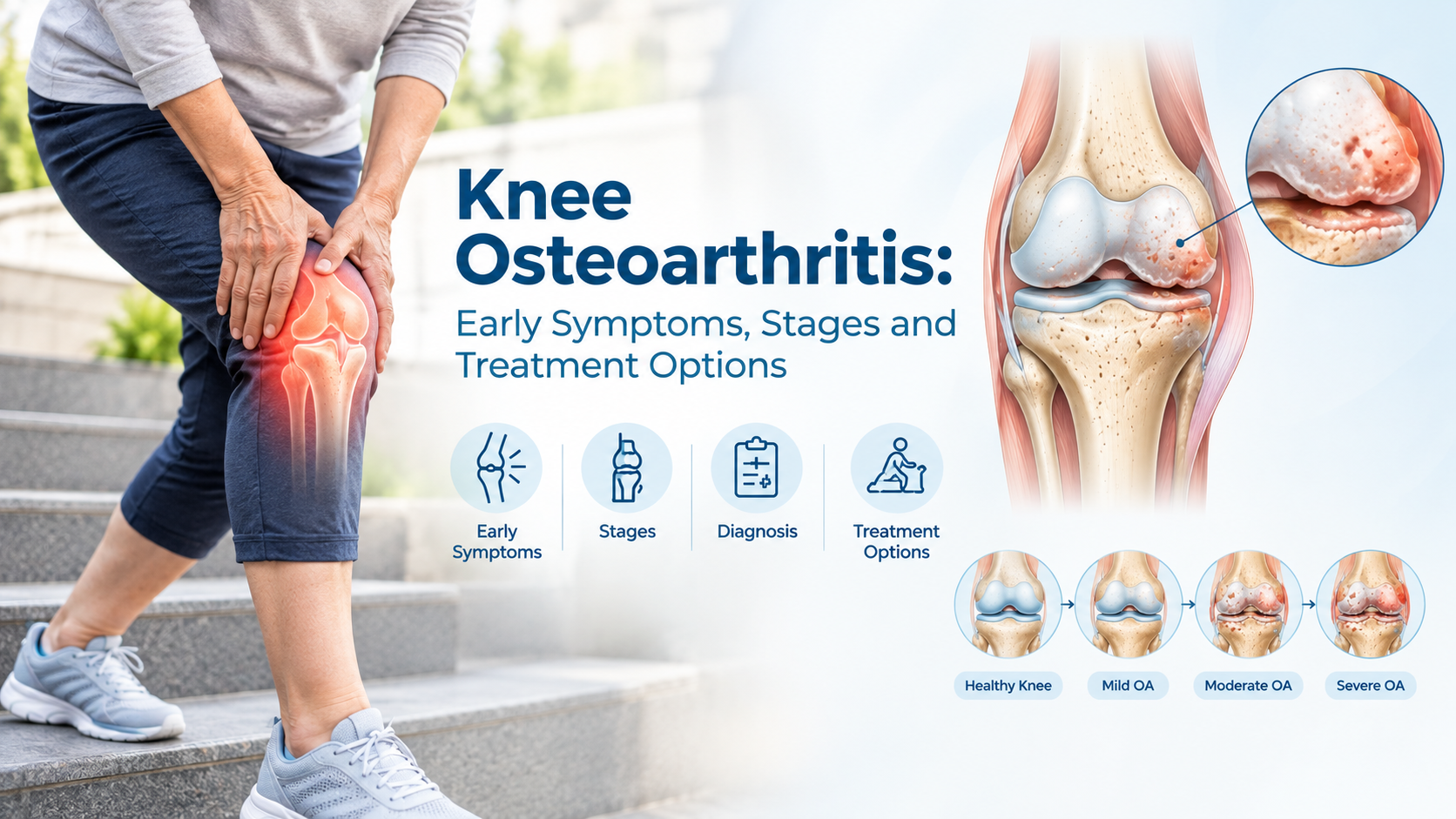
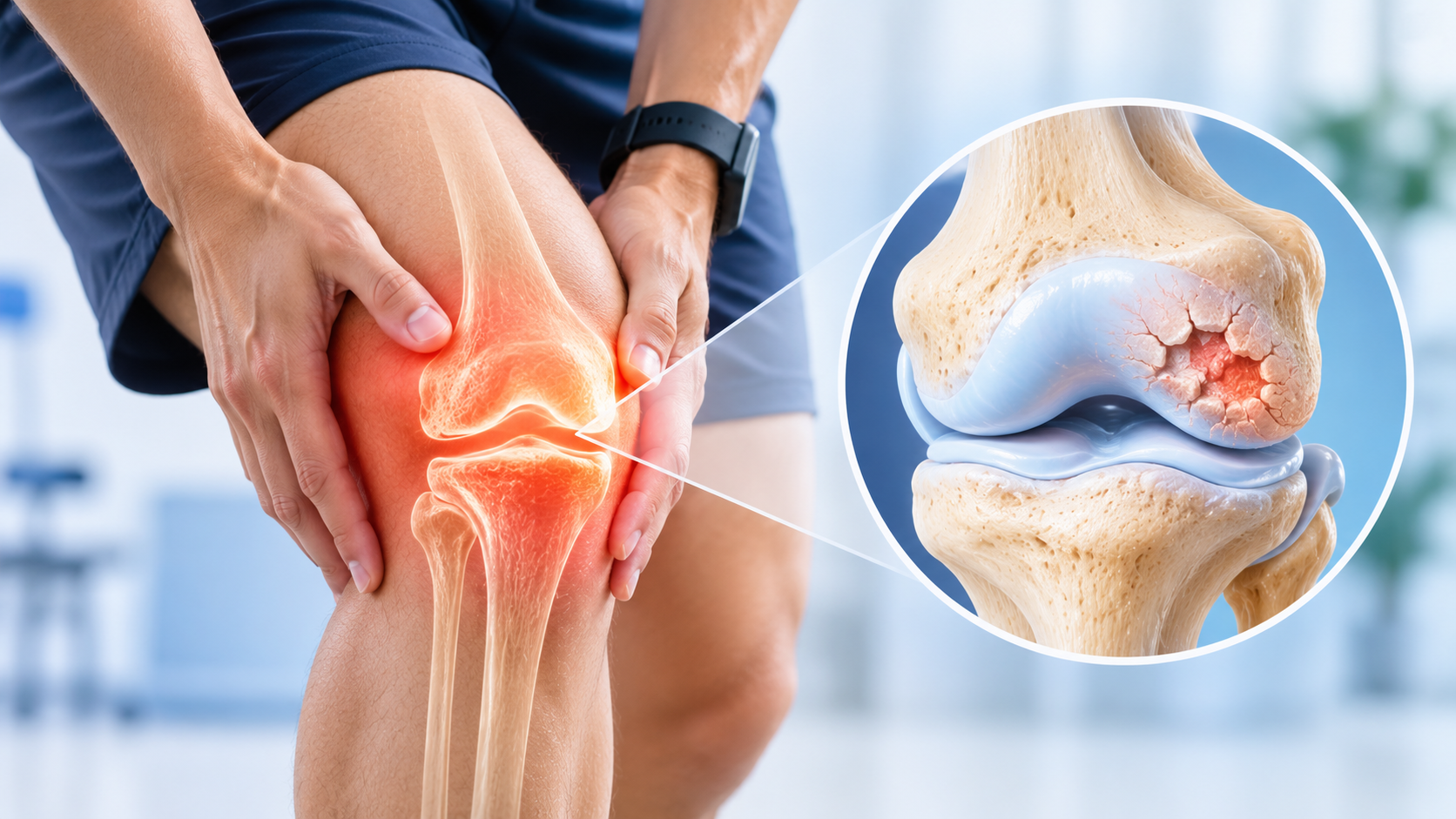
Knee cartilage damage occurs when this protective surface develops a defect, becomes softened or loses its normal structure. A focal cartilage injury affects a specific area, while more widespread cartilage deterioration may be associated with osteoarthritis.
Articular cartilage has limited natural healing capacity because it lacks its own direct blood supply. The extent of damage, the condition of the underlying bone and other knee structures, and the patient's symptoms all influence treatment decisions.
Cartilage damage is not the same as a meniscus tear. The meniscus is a separate cushioning structure within the knee, although both injuries can occur together.
What Causes Knee Cartilage Damage?
Knee cartilage damage may develop suddenly following an injury or gradually over time. A detailed assessment helps identify the cause and whether other structures are also affected.
Sports injuries involving twisting, impact or a sudden change in direction can damage the articular cartilage. Cartilage injury may also occur alongside ligament injuries, patellar dislocation or fractures involving the joint surface.
Repeated loading, certain joint alignment problems and abnormal mechanics may contribute to stress on specific areas of cartilage. In some individuals, cartilage deterioration develops as part of osteoarthritis, which involves changes throughout the joint rather than a single isolated defect.
Previous knee surgery, associated meniscus problems and instability may also influence the condition of the cartilage. Identifying these contributing factors is important because treating the cartilage alone may not address the underlying mechanical problem.
Symptoms of Knee Cartilage Damage
Symptoms vary according to the location, size and depth of the cartilage defect. Some small cartilage injuries produce no noticeable symptoms, while others cause significant discomfort and activity limitations.
Common symptoms include pain during walking, running or climbing stairs, swelling after physical activity, stiffness following rest, discomfort during squatting or bending, and reduced range of motion.
Some patients notice clicking, catching or a sensation that the knee is not moving smoothly. These symptoms may also occur with meniscus injuries, loose bodies or other knee conditions, so they do not independently confirm cartilage damage.
Pain may be particularly noticeable during activities that load the affected joint surface. Recurrent swelling or persistent discomfort after a knee injury deserves medical evaluation.
How Is Knee Cartilage Damage Diagnosed?
Diagnosis begins with a review of symptoms, previous injuries, activity levels and the circumstances in which pain occurs. An orthopaedic examination assesses swelling, joint movement, tenderness, alignment and stability, while also checking for associated meniscus or ligament problems.
X-rays are often used initially to assess bone alignment, fractures and signs of osteoarthritis. However, articular cartilage itself is not directly visible on standard X-rays, so normal X-ray findings do not rule out cartilage damage.
MRI can provide detailed information about cartilage, underlying bone and associated soft-tissue injuries. It is particularly useful when symptoms persist or when a focal cartilage defect is suspected.
Arthroscopy allows the surgeon to inspect the joint directly using a small camera. It may be used when surgery is indicated, but it is not necessary for every patient with suspected cartilage damage.
Imaging findings must be interpreted alongside symptoms and examination results. A cartilage defect seen on MRI may not always be the main source of pain.
Non-Surgical Treatment for Knee Cartilage Damage
Many patients can begin with non-surgical treatment, particularly when the cartilage defect is small, symptoms are manageable or surgery is not immediately necessary. The treatment plan depends on the nature of the injury and individual functional goals.
Activity modification may involve temporarily reducing running, jumping, deep squatting or other movements that aggravate symptoms. This does not necessarily mean complete inactivity; suitable low-impact activities may help maintain mobility and fitness.
Physiotherapy focuses on improving quadriceps strength, hip muscle control, flexibility, balance and knee movement. Strengthening surrounding muscles can improve joint support and help patients return to appropriate activities.
Pain-relief medication may be recommended for selected patients after considering medical history and possible side effects. Cold packs and other supportive measures may help manage swelling and discomfort.
Injections may be discussed in particular circumstances to manage symptoms. Their benefits, limitations and suitability vary, and injections should not be presented as a guaranteed method of regenerating normal cartilage.
What Is Knee Cartilage Repair or Restoration?
Cartilage restoration refers to procedures intended to repair or replace damaged areas of articular cartilage. These treatments are generally considered for selected patients with symptomatic focal cartilage defects when appropriate non-surgical treatment has not provided sufficient relief.
The choice of procedure depends on factors such as the size, depth and location of the defect, the condition of the underlying bone, knee alignment, meniscus function, ligament stability, age and activity expectations.
The aim may be to improve joint function, reduce symptoms and preserve the natural knee. Different procedures produce different types of repair tissue, and restored cartilage is not always identical to the original healthy articular cartilage.
Cartilage restoration is not suitable for every patient. Widespread cartilage loss or advanced osteoarthritis may require a different treatment strategy rather than a focal cartilage repair procedure.
Types of Knee Cartilage Repair Procedures
Arthroscopic chondroplasty involves smoothing unstable or damaged cartilage edges in selected cases. It may help address certain mechanical symptoms, but it does not regenerate normal cartilage or restore a large cartilage defect.
Microfracture is a bone-marrow stimulation technique used in selected cartilage defects. Small openings are created in the underlying bone to allow marrow cells and blood to enter the defect and form repair tissue. The resulting tissue is generally fibrocartilage rather than the original hyaline cartilage, and outcomes vary according to patient selection and defect characteristics.
Osteochondral autograft transplantation transfers small plugs of cartilage and underlying bone from another area of the joint to the damaged region. It may be suitable for selected smaller defects.
Osteochondral allograft transplantation uses donor cartilage and bone to address certain larger defects. It may be considered when the size or nature of the defect makes other approaches less suitable.
Autologous chondrocyte implantation (ACI) and related cell-based techniques involve using a patient's cartilage cells or cartilage-derived tissue to treat selected defects. These procedures have specific indications and may require staged treatment and rehabilitation.
No single cartilage restoration procedure is for every knee. A specialist evaluates the defect and associated joint problems before recommending a suitable option.
Recovery After Knee Cartilage Treatment
Recovery depends on the extent of cartilage damage, the treatment performed and whether other structures such as the meniscus or ligaments were also treated.
After non-surgical treatment, patients may gradually increase activity as pain, swelling and strength improve. Physiotherapy helps restore movement, muscle control and confidence in the knee.
Following cartilage restoration surgery, weight-bearing may be restricted for a period to protect the repair. Some patients require crutches, a brace or a carefully structured rehabilitation programme. The timeline for returning to sports or high-impact activities varies considerably.
Rehabilitation is an important part of cartilage treatment. Returning to demanding activity too early may place excessive stress on the healing joint, while appropriate progression helps support functional recovery.
The surgeon and physiotherapist provide a recovery plan based on the procedure performed, the patient's progress and the condition of the knee.
Can Knee Cartilage Damage Lead to Osteoarthritis?
Certain cartilage injuries can increase the risk of developing osteoarthritis over time, particularly when the injury involves the joint surface, underlying bone or other important knee structures.
However, a cartilage defect does not automatically mean that a patient will develop advanced arthritis. The risk depends on several factors, including the extent of damage, alignment, joint stability, meniscus health and ongoing mechanical stress.
Early evaluation can help identify associated problems and guide appropriate treatment. Maintaining strength, managing activity and following a rehabilitation plan may support knee function, although no treatment can guarantee prevention of future arthritis.
When Should You See an Orthopaedic Specialist?
Consult an orthopaedic specialist if knee pain persists after an injury, swelling repeatedly develops after activity, movement becomes restricted or symptoms interfere with walking, exercise or daily tasks.
Seek urgent medical attention after a significant knee injury if you cannot bear weight, the knee appears deformed, swelling develops rapidly or the joint becomes locked. These symptoms may indicate a serious injury requiring prompt assessment.
An orthopaedic evaluation can help determine whether the problem involves cartilage, meniscus, ligaments, bone or another structure and whether imaging or specialised treatment is required.
Conclusion
Knee cartilage damage can affect movement, comfort and activity levels, but its severity and treatment requirements vary widely. A small focal defect is different from widespread cartilage loss associated with advanced osteoarthritis.
Accurate diagnosis, appropriate activity modification, physiotherapy and carefully selected treatment can help manage symptoms and support knee function. When cartilage restoration is considered, the procedure must be matched to the defect and the overall condition of the joint.
Early assessment by an orthopaedic specialist helps patients understand their options and make informed decisions about treatment and recovery.
Frequently asked questions
Symptoms may include knee pain during activity, swelling, stiffness, discomfort during squatting or stair climbing and reduced range of motion. Some patients also experience clicking or catching, although these symptoms can occur with other knee conditions.
Articular cartilage has limited natural healing capacity. Some small defects may remain stable or cause few symptoms, while other injuries require treatment. The healing potential depends on the location, depth and nature of the damage.
Some patients improve with activity modification, physiotherapy, strengthening and appropriate symptom management. These measures may help improve function and reduce pain, but they do not necessarily regenerate lost articular cartilage.
MRI can provide detailed information about articular cartilage and associated structures such as bone, meniscus and ligaments. The findings should be interpreted alongside symptoms and examination because not every cartilage defect causes pain.
There is no single treatment for every patient. Options may include physiotherapy, activity modification, symptom management and selected cartilage restoration procedures. Treatment depends on defect size, location, symptoms and overall knee health.
No. Cartilage restoration is generally intended to address selected focal cartilage defects and preserve the natural joint. Knee replacement is considered for certain patients with advanced joint disease and extensive cartilage loss.
Recovery varies according to the procedure and the extent of damage. Some treatments require temporary restrictions on weight-bearing and several months of structured rehabilitation before higher-impact activities can be considered.
Certain cartilage injuries may increase the risk of osteoarthritis, particularly when associated with damage to other joint structures. However, cartilage damage does not automatically lead to advanced arthritis.
Originally published on dranilraheja.com.